Premium Snake Gourd Seeds
High-quality snake gourd varieties suitable for vigorous growth and uniform fruit development.
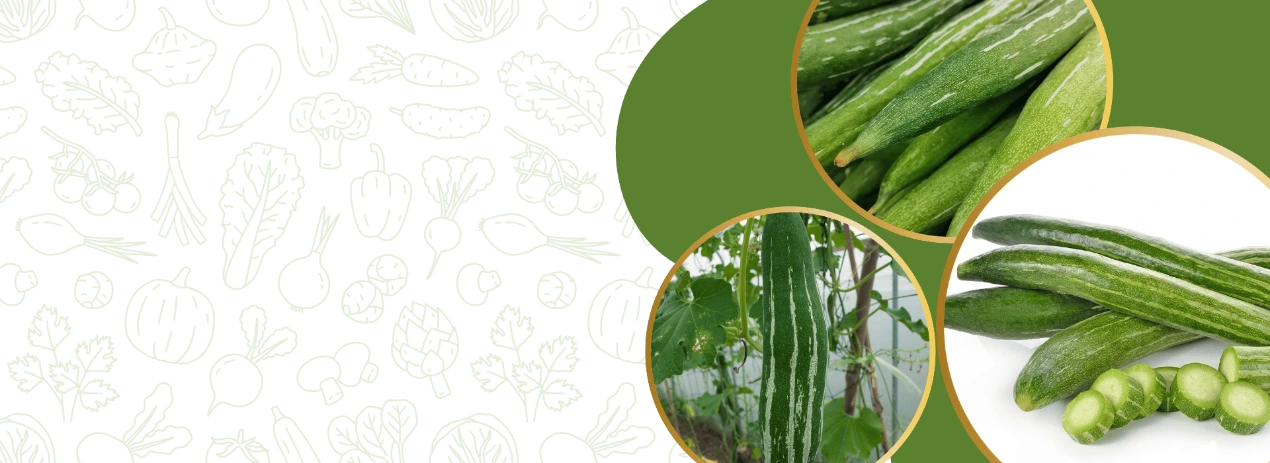
Snake Gourd Varieties
FARMSON BIOTECH Snake Gourd Seeds support healthy vine growth, attractive fruit length, and strong market demand with proper cultivation practices.
Complete Package of Practices for Snack Gourd Cultivation
Snack gourd (ivy gourd / tindora) is a hardy, warm-season perennial climbing vine grown for its small, finger-sized, tender green fruit. Unlike the annual gourds, once it is established on a permanent trellis it crops for several years with small, frequent harvests. Two points decide success: it is dioecious (separate male and female plants), so you must plant fruit-bearing female plants with a few males or use parthenocarpic types, and it is usually raised from stem cuttings or seed. This guide covers full technical practice plus a country-wise climate and planting calendar for farmers worldwide.
Quick Navigation
- 01 Crop Overview & Types
- 02 Climatic Requirements
- 03 Soil & Field Preparation
- 04 Planting Material: Seed & Cuttings
- 05 Planting, Spacing & Establishment
- 06 Trellis / Pandal Training
- 07 Male & Female Plants, Pollination
- 08 Nutrient Management
- 09 Irrigation
- 10 Weed, Pruning & Care
- 11 Pest Management
- 12 Disease Management
- 13 Multi-Year Crop Management
- 14 Harvesting & Post-Harvest
- 15 Country-Wise Climate & Planting Guide
- 16 Frequently Asked Questions
1. Crop Overview & Types
- Common names: Snack gourd, ivy gourd, tindora, tendli, kundru, kovai
- Scientific name: Coccinia grandis
- Crop type: Warm-season, frost-sensitive, perennial climbing vine
- Identifying feature: small, finger-sized, smooth oval fruit, deep green (turns red when over-ripe); eaten young and green.
- Uses: Cooking and stir-fry vegetable; also valued for its traditional health and dietary properties.
- Habit: a vigorous perennial that, once established, fruits in flushes for several years.
2. Climatic Requirements
- Temperature: 24–35 °C is ideal; the crop loves warm tropical and subtropical conditions and is frost-sensitive.
- Climate: Warm, sunny weather year-round suits it; growth slows in cool weather.
- Soil: Well-drained fertile loam rich in organic matter; pH 6.0–7.0. Avoid waterlogging.
- Rainfall: Grows in the rains with good drainage; very hardy and drought-tolerant once established.
3. Soil & Field Preparation
- Plough to a fine tilth and level the field for good drainage.
- Dig planting pits and fill with topsoil mixed with well-decomposed FYM / compost; as a perennial it benefits from rich, deep soil at each pit.
- Set up the permanent trellis / pandal before or at planting, since the crop stays for years.
4. Planting Material: Seed & Cuttings
- From seed: sow good-quality seed in pro-trays or pits; seed-raised plants are easy to start but give a mix of male and female plants, so you select and keep the fruit-bearing female plants.
- From stem cuttings: the traditional method — take healthy, semi-hard cuttings 15–20 cm long from a known good female (fruiting) vine, and plant them. This guarantees fruiting female plants that are true to type.
- Treat planting material / seed with a fungicide or Trichoderma to prevent rot.
5. Planting, Spacing & Establishment
- Plant at the start of the warm season into prepared pits; keep soil moist until established.
- Spacing: about 1.5–2.0 m between rows and 1.0–1.5 m between plants, along the trellis line.
- Allow a few male plants among the females for pollination (see Section 7), unless using parthenocarpic types.
- Train the new shoots up to the trellis as they grow.
6. Trellis / Pandal Training
- Grow on a permanent, sturdy pandal or trellis — since the crop stays for years, build it to last.
- The trellis keeps the small fruit clean and easy to pick, gives full sun, and improves airflow to reduce disease.
- Spread the vines evenly across the top of the pandal for maximum fruiting surface.
7. Male & Female Plants, Pollination
- Snack gourd is dioecious — male and female flowers are on separate plants. Only female plants bear fruit.
- For a fruiting plantation, plant mostly female plants plus a few male plants (roughly one male for every 8–10 females) to provide pollen, or use parthenocarpic female types that set fruit without pollination.
- Bees do the pollination — encourage them and spray only in the late evening.
8. Nutrient Management
As a perennial, snack gourd needs an establishment dose plus regular maintenance feeding each season:
- Apply FYM / compost and a balanced NPK dose at planting and again at the start of each fruiting season.
- Top-dress with nitrogen and potassium during active growth and fruiting to sustain flushes.
- Add micronutrients as recommended; fertigation through drip is ideal for steady feeding over the years.
9. Irrigation
- Keep soil evenly moist during active growth and fruiting; the established perennial is fairly drought-tolerant but yields best with regular water.
- Critical stages: flowering and fruit flushes.
- Avoid waterlogging, which causes root rot.
- Drip irrigation suits this long-term crop well.
10. Weed, Pruning & Care
- Keep the base weed-free; mulch around the pits.
- Prune the vine after each major fruiting flush — remove old, dried and overcrowded growth to encourage fresh, productive shoots.
- Train new shoots onto the trellis and keep the canopy open for light and airflow.
11. Plant Protection — Pests
| Pest | Symptom | Management |
|---|---|---|
| Fruit fly | Stings young fruit; maggots; fruit rots and drops | Pheromone / cue-lure traps; bait sprays; collect and destroy fallen fruit |
| Aphids / whitefly | Sap-sucking; spread virus | Sticky traps; need-based control |
| Mites | Leaf bronzing and curling | Acaricides as per local recommendation; scout regularly |
| Leaf-eating beetles | Damaged leaves | Hand-pick; need-based control |
12. Plant Protection — Diseases
| Disease | Symptom | Management |
|---|---|---|
| Powdery mildew | White powdery growth on leaves | Airflow through pruning; sulphur or recommended fungicide |
| Mosaic virus | Mottled, distorted leaves | Control aphids and whitefly; remove badly affected vines |
| Root / collar rot | Wilting in wet soils | Good drainage; avoid waterlogging; bio-control |
| Leaf spot | Spots on leaves in wet weather | Prune for airflow; protectant fungicide |
13. Multi-Year Crop Management
- Once established, snack gourd fruits in flushes for several years from the same plants.
- Rejuvenate each year: after the main season, prune back the old vine hard, remove dead wood, top-dress with manure and NPK, and irrigate to push fresh, productive new growth.
- Replace weak or non-fruiting plants and keep the trellis in good repair.
- With good rejuvenation, a planting stays productive for several seasons before it needs replanting.
14. Harvesting & Post-Harvest
- First harvest begins about 60–75 days after planting (sooner from cuttings).
- Pick fruit young, tender and deep green, at finger size, before it starts to soften or turn red.
- Pick very frequently — every 3–5 days; the plant fruits continuously in flushes, and regular picking keeps it productive.
- Handle gently; grade and pack in ventilated boxes.
- Yield: high and continuous over the season, building up as the perennial establishes and giving good returns over several years.
- Fruit is fairly hardy but best marketed fresh.
15. Country-Wise Climate & Planting Guide
Snack gourd is a warm-climate perennial best planted at the start of the warm season and grown year-round in frost-free regions. In areas with cold winters it is treated as a warm-season crop or grown under protection. Windows below are indicative — adjust to local conditions.
| Country / Region | Climate | Best planting / season | Heat & frost caution |
|---|---|---|---|
| TROPICAL & SUBTROPICAL (main belts) | |||
| India | Tropical / subtropical | Plant Feb–Mar or Jun–Jul; crops year-round in warm zones | Ensure drainage in the monsoon; protect from frost in the north |
| Pakistan / Bangladesh | Subtropical | Spring planting; warm-season crop | Cold winters slow or stop growth |
| Egypt / N. Africa | Arid subtropical | Spring; warm-season perennial with irrigation | Protect from any winter frost |
| Nigeria / Kenya / E. Africa | Tropical | Year-round in warm zones | Drain well in heavy rains |
| Gulf (Saudi / UAE) | Hot arid | Warm season with irrigation | Thrives in heat with water |
| SE Asia | Humid tropical (popular crop) | Year-round | Manage fruit fly and humidity diseases |
| WARM TEMPERATE & ELSEWHERE | |||
| USA (south) / Caribbean | Warm temperate to tropical | Warm season; popular in Asian-vegetable markets | Frost kills the vine; regrows in frost-free areas |
| Mediterranean / Mexico | Mediterranean / subtropical | Late spring–summer | Treat as warm-season crop where winters are cold |
| Cool-winter regions | Temperate | Warm season or greenhouse | Will not survive hard frost outdoors |
16. Frequently Asked Questions
Why is my snack gourd flowering but not setting fruit?
Snack gourd is dioecious — only female plants bear fruit, and they need pollen from male plants. If your plot is all female (or all male) with no pollination, you get flowers but little fruit. Plant a few male plants among the females, or use parthenocarpic female types.
Should I grow snack gourd from seed or cuttings?
Both work. Seed is easy to start but gives a mix of male and female plants to select from. Cuttings taken from a known good female (fruiting) vine guarantee true-to-type, fruiting plants, which is why cuttings are traditionally preferred for a uniform plantation.
How long does a snack gourd plant keep producing?
As a perennial it crops in flushes for several years from the same plants. Pruning back hard and top-dressing with manure and fertilizer after each season rejuvenates it for the next.
Does snack gourd need a trellis?
Yes — a permanent, sturdy trellis or pandal. It keeps the small fruit clean and easy to pick, gives full sun and airflow, and supports the vine over its multi-year life.
When should I harvest snack gourd?
Pick it young, tender and deep green at finger size, before it softens or turns red. Harvest every 3–5 days, as it fruits continuously.
What temperature does snack gourd need?
About 24–35 °C. It loves warm tropical and subtropical conditions and is frost-sensitive; growth slows in cool weather.
How do I rejuvenate the crop each year?
After the main fruiting season, prune the old vine back hard, remove dead wood, top-dress with manure and NPK, and irrigate to push fresh productive shoots for the next flush.
Explore More Farmson Crop Guides
Bitter Gourd Ridge Gourd Sponge Gourd Bottle Gourd Cucumber View All Vegetable SeedsGrow with Farmson Biotech Snack Gourd Seeds
Productive snack gourd (ivy gourd / tindora) planting material for tender, finger-sized green fruit.
Send Export InquiryComplete Package of Practices for Snack Gourd Cultivation
Snack gourd (ivy gourd / tindora) is a hardy, warm-season perennial climbing vine grown for its small, finger-sized, tender green fruit. Unlike the annual gourds, once it is established on a permanent trellis it crops for several years with small, frequent harvests. Two points decide success: it is dioecious (separate male and female plants), so you must plant fruit-bearing female plants with a few males or use parthenocarpic types, and it is usually raised from stem cuttings or seed. This guide covers full technical practice plus a country-wise climate and planting calendar for farmers worldwide.
Quick Navigation
- 01 Crop Overview & Types
- 02 Climatic Requirements
- 03 Soil & Field Preparation
- 04 Planting Material: Seed & Cuttings
- 05 Planting, Spacing & Establishment
- 06 Trellis / Pandal Training
- 07 Male & Female Plants, Pollination
- 08 Nutrient Management
- 09 Irrigation
- 10 Weed, Pruning & Care
- 11 Pest Management
- 12 Disease Management
- 13 Multi-Year Crop Management
- 14 Harvesting & Post-Harvest
- 15 Country-Wise Climate & Planting Guide
- 16 Frequently Asked Questions
1. Crop Overview & Types
- Common names: Snack gourd, ivy gourd, tindora, tendli, kundru, kovai
- Scientific name: Coccinia grandis
- Crop type: Warm-season, frost-sensitive, perennial climbing vine
- Identifying feature: small, finger-sized, smooth oval fruit, deep green (turns red when over-ripe); eaten young and green.
- Uses: Cooking and stir-fry vegetable; also valued for its traditional health and dietary properties.
- Habit: a vigorous perennial that, once established, fruits in flushes for several years.
2. Climatic Requirements
- Temperature: 24–35 °C is ideal; the crop loves warm tropical and subtropical conditions and is frost-sensitive.
- Climate: Warm, sunny weather year-round suits it; growth slows in cool weather.
- Soil: Well-drained fertile loam rich in organic matter; pH 6.0–7.0. Avoid waterlogging.
- Rainfall: Grows in the rains with good drainage; very hardy and drought-tolerant once established.
3. Soil & Field Preparation
- Plough to a fine tilth and level the field for good drainage.
- Dig planting pits and fill with topsoil mixed with well-decomposed FYM / compost; as a perennial it benefits from rich, deep soil at each pit.
- Set up the permanent trellis / pandal before or at planting, since the crop stays for years.
4. Planting Material: Seed & Cuttings
- From seed: sow good-quality seed in pro-trays or pits; seed-raised plants are easy to start but give a mix of male and female plants, so you select and keep the fruit-bearing female plants.
- From stem cuttings: the traditional method — take healthy, semi-hard cuttings 15–20 cm long from a known good female (fruiting) vine, and plant them. This guarantees fruiting female plants that are true to type.
- Treat planting material / seed with a fungicide or Trichoderma to prevent rot.
5. Planting, Spacing & Establishment
- Plant at the start of the warm season into prepared pits; keep soil moist until established.
- Spacing: about 1.5–2.0 m between rows and 1.0–1.5 m between plants, along the trellis line.
- Allow a few male plants among the females for pollination (see Section 7), unless using parthenocarpic types.
- Train the new shoots up to the trellis as they grow.
6. Trellis / Pandal Training
- Grow on a permanent, sturdy pandal or trellis — since the crop stays for years, build it to last.
- The trellis keeps the small fruit clean and easy to pick, gives full sun, and improves airflow to reduce disease.
- Spread the vines evenly across the top of the pandal for maximum fruiting surface.
7. Male & Female Plants, Pollination
- Snack gourd is dioecious — male and female flowers are on separate plants. Only female plants bear fruit.
- For a fruiting plantation, plant mostly female plants plus a few male plants (roughly one male for every 8–10 females) to provide pollen, or use parthenocarpic female types that set fruit without pollination.
- Bees do the pollination — encourage them and spray only in the late evening.
8. Nutrient Management
As a perennial, snack gourd needs an establishment dose plus regular maintenance feeding each season:
- Apply FYM / compost and a balanced NPK dose at planting and again at the start of each fruiting season.
- Top-dress with nitrogen and potassium during active growth and fruiting to sustain flushes.
- Add micronutrients as recommended; fertigation through drip is ideal for steady feeding over the years.
9. Irrigation
- Keep soil evenly moist during active growth and fruiting; the established perennial is fairly drought-tolerant but yields best with regular water.
- Critical stages: flowering and fruit flushes.
- Avoid waterlogging, which causes root rot.
- Drip irrigation suits this long-term crop well.
10. Weed, Pruning & Care
- Keep the base weed-free; mulch around the pits.
- Prune the vine after each major fruiting flush — remove old, dried and overcrowded growth to encourage fresh, productive shoots.
- Train new shoots onto the trellis and keep the canopy open for light and airflow.
11. Plant Protection — Pests
| Pest | Symptom | Management |
|---|---|---|
| Fruit fly | Stings young fruit; maggots; fruit rots and drops | Pheromone / cue-lure traps; bait sprays; collect and destroy fallen fruit |
| Aphids / whitefly | Sap-sucking; spread virus | Sticky traps; need-based control |
| Mites | Leaf bronzing and curling | Acaricides as per local recommendation; scout regularly |
| Leaf-eating beetles | Damaged leaves | Hand-pick; need-based control |
12. Plant Protection — Diseases
| Disease | Symptom | Management |
|---|---|---|
| Powdery mildew | White powdery growth on leaves | Airflow through pruning; sulphur or recommended fungicide |
| Mosaic virus | Mottled, distorted leaves | Control aphids and whitefly; remove badly affected vines |
| Root / collar rot | Wilting in wet soils | Good drainage; avoid waterlogging; bio-control |
| Leaf spot | Spots on leaves in wet weather | Prune for airflow; protectant fungicide |
13. Multi-Year Crop Management
- Once established, snack gourd fruits in flushes for several years from the same plants.
- Rejuvenate each year: after the main season, prune back the old vine hard, remove dead wood, top-dress with manure and NPK, and irrigate to push fresh, productive new growth.
- Replace weak or non-fruiting plants and keep the trellis in good repair.
- With good rejuvenation, a planting stays productive for several seasons before it needs replanting.
14. Harvesting & Post-Harvest
- First harvest begins about 60–75 days after planting (sooner from cuttings).
- Pick fruit young, tender and deep green, at finger size, before it starts to soften or turn red.
- Pick very frequently — every 3–5 days; the plant fruits continuously in flushes, and regular picking keeps it productive.
- Handle gently; grade and pack in ventilated boxes.
- Yield: high and continuous over the season, building up as the perennial establishes and giving good returns over several years.
- Fruit is fairly hardy but best marketed fresh.
15. Country-Wise Climate & Planting Guide
Snack gourd is a warm-climate perennial best planted at the start of the warm season and grown year-round in frost-free regions. In areas with cold winters it is treated as a warm-season crop or grown under protection. Windows below are indicative — adjust to local conditions.
| Country / Region | Climate | Best planting / season | Heat & frost caution |
|---|---|---|---|
| TROPICAL & SUBTROPICAL (main belts) | |||
| India | Tropical / subtropical | Plant Feb–Mar or Jun–Jul; crops year-round in warm zones | Ensure drainage in the monsoon; protect from frost in the north |
| Pakistan / Bangladesh | Subtropical | Spring planting; warm-season crop | Cold winters slow or stop growth |
| Egypt / N. Africa | Arid subtropical | Spring; warm-season perennial with irrigation | Protect from any winter frost |
| Nigeria / Kenya / E. Africa | Tropical | Year-round in warm zones | Drain well in heavy rains |
| Gulf (Saudi / UAE) | Hot arid | Warm season with irrigation | Thrives in heat with water |
| SE Asia | Humid tropical (popular crop) | Year-round | Manage fruit fly and humidity diseases |
| WARM TEMPERATE & ELSEWHERE | |||
| USA (south) / Caribbean | Warm temperate to tropical | Warm season; popular in Asian-vegetable markets | Frost kills the vine; regrows in frost-free areas |
| Mediterranean / Mexico | Mediterranean / subtropical | Late spring–summer | Treat as warm-season crop where winters are cold |
| Cool-winter regions | Temperate | Warm season or greenhouse | Will not survive hard frost outdoors |
16. Frequently Asked Questions
Why is my snack gourd flowering but not setting fruit?
Snack gourd is dioecious — only female plants bear fruit, and they need pollen from male plants. If your plot is all female (or all male) with no pollination, you get flowers but little fruit. Plant a few male plants among the females, or use parthenocarpic female types.
Should I grow snack gourd from seed or cuttings?
Both work. Seed is easy to start but gives a mix of male and female plants to select from. Cuttings taken from a known good female (fruiting) vine guarantee true-to-type, fruiting plants, which is why cuttings are traditionally preferred for a uniform plantation.
How long does a snack gourd plant keep producing?
As a perennial it crops in flushes for several years from the same plants. Pruning back hard and top-dressing with manure and fertilizer after each season rejuvenates it for the next.
Does snack gourd need a trellis?
Yes — a permanent, sturdy trellis or pandal. It keeps the small fruit clean and easy to pick, gives full sun and airflow, and supports the vine over its multi-year life.
When should I harvest snack gourd?
Pick it young, tender and deep green at finger size, before it softens or turns red. Harvest every 3–5 days, as it fruits continuously.
What temperature does snack gourd need?
About 24–35 °C. It loves warm tropical and subtropical conditions and is frost-sensitive; growth slows in cool weather.
How do I rejuvenate the crop each year?
After the main fruiting season, prune the old vine back hard, remove dead wood, top-dress with manure and NPK, and irrigate to push fresh productive shoots for the next flush.
Explore More Farmson Crop Guides
Bitter Gourd Ridge Gourd Sponge Gourd Bottle Gourd Cucumber View All Vegetable SeedsGrow with Farmson Biotech Snack Gourd Seeds
Productive snack gourd (ivy gourd / tindora) planting material for tender, finger-sized green fruit.
Send Export InquiryAgricultural Advisory Notice
The recommendations and crop guidance provided on this website are intended for informational purposes only and should not be considered a guaranteed agronomic outcome. Local climatic conditions, soil health, cultivation methods, and regional practices may influence actual crop performance. FARMSON BIOTECH PVT LTD recommends farmers seek guidance from authorized agricultural experts or local government agricultural authorities before cultivation decisions.