Premium Fodder Seed Solutions
Nutritious fodder seed varieties developed for livestock feed production and sustainable farming.
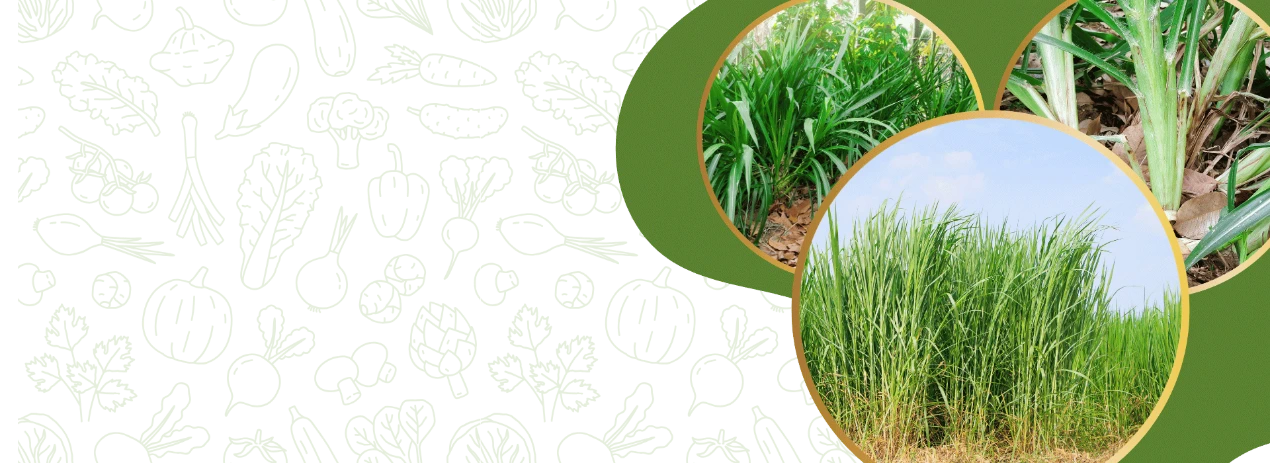
Fodder Varieties
FARMSON BIOTECH Fodder Seeds support high biomass production, good nutritional value, and reliable growth performance for dairy and livestock farming applications.
Complete Package of Practices for Hybrid Napier (Bajra-Napier) Cultivation
Hybrid Napier (Bajra-Napier hybrid, BN hybrid, Super Napier, Pakchong, hathi ghaas) is the world's highest-biomass forage crop, a perennial bunch grass developed by crossing pearl millet (Pennisetum glaucum, bajra) with elephant grass (P. purpureum, Napier). The result is a vigorous, drought-tolerant, multi-cut grass that yields 250–400 tonnes of green fodder per hectare per year from one planting that lasts 4–5 years or more. It is the backbone of intensive dairy farming across India, East Africa, Southeast Asia and Latin America. Success depends on choosing the right variety for your climate, using healthy stem cuttings from a 100-day-old mother crop, managing cut height and frequency carefully, and feeding the crop heavily with nitrogen after every cut. This guide covers complete technical practice from establishment to harvest, plus a country-wise climate and planting calendar for farmers worldwide.
Quick Navigation
- 01 Crop Overview
- 02 Climatic Requirements
- 03 Soil & Land Preparation
- 04 Propagation & Planting
- 05 Cutting / Slip Selection & Treatment
- 06 Spacing & Plant Population
- 07 Cutting Cycle & Stubble Management
- 08 Nutrient Management
- 09 Irrigation
- 10 Weed & Intercultural Care
- 11 Pest Management
- 12 Disease Management
- 13 Anti-Nutritional & Quality Issues
- 14 Harvesting & Utilisation
- 15 Country-Wise Climate & Planting Guide
- 16 Frequently Asked Questions
1. Crop Overview
- Common names: Hybrid Napier, Bajra-Napier hybrid (BN hybrid), Super Napier, Pakchong-1, elephant grass hybrid, hathi ghaas, king grass
- Scientific name: Pennisetum purpureum × Pennisetum glaucum (modern taxonomy: Cenchrus purpureus × C. americanus)
- Crop type: Perennial bunch / clump grass; C4 photosynthesis; deep-rooted; vegetatively propagated; produces tillers from base
- Life span: 4–5 years from one planting under standard management; up to 7–8 years with replanting of weak hills
- Parentage advantages: the Napier parent contributes high biomass and perenniality; the bajra parent contributes leafiness, palatability, fast regrowth and a higher leaf-to-stem ratio. The hybrid combines the best of both.
- Main varieties:
- CO-3, CO-4, CO-5 (Tamil Nadu Agricultural University) — widely planted across India; high tillering and biomass
- DHN-6 (Dharwad Hybrid Napier, UAS-Dharwad) — vigorous, drought-tolerant
- APBN-1 (Andhra Pradesh Bajra-Napier) — high yield, low oxalate
- Sampoorna (Kerala Agricultural University) — suited to Kerala's high-rainfall coastal soils
- PBN-1, IGFRI-5, IGFRI-6 — ICAR-IGFRI varieties
- Super Napier / Pakchong-1 — the Thai variety, now widely grown across South and Southeast Asia for its high crude protein and very fast regrowth
- Red Napier — a red-stem ornamental-and-fodder line, slightly lower yield but very palatable
- Nutritional profile (at the right cutting stage): crude protein 8–12% (up to 16% in Super Napier), crude fibre 28–35%, dry matter 18–22% — excellent green fodder for dairy cattle, buffaloes, goats, sheep and rabbits
- Use: fresh green chop (cut-and-carry stall feeding), silage, hay (difficult due to thick stems), live windbreak / boundary, biofuel and pulp feedstock in some markets
- Sterility: the hybrid is sterile or near-sterile — cannot be propagated from seed. Always propagate from stem cuttings or root slips.
2. Climatic Requirements
- Temperature: Optimum 25–35 °C; tolerates 18–38 °C; growth slows below 15 °C; severely damaged by frost — the top dies back but the established crown usually survives and resprouts when warmth returns.
- Rainfall: 800–2500 mm; very productive in well-distributed rainfall, but the deep root system makes it surprisingly drought-tolerant once established.
- Daylength: Day-neutral; flowers rarely under tropical conditions; the hybrid in any case sets little or no viable seed.
- Sunshine: Full sun is essential; even moderate shade drops biomass sharply — do not plant under closed-canopy orchards.
- Altitude: Sea level to 2000 m; best at 0–1500 m.
- Wind: Tall canopy (3–4 m if uncut) lodges in strong wind; cut on schedule or use windbreaks.
3. Soil & Land Preparation
- Soil: Well-drained sandy loam to clay loam, deep, rich in organic matter; tolerates a wide range from sandy to heavy clay.
- pH: 5.5–7.5; tolerates mildly acidic soils better than most fodder crops.
- The non-negotiable rule: drainage. Napier rots in waterlogged soil — avoid low-lying flood-prone land.
- Plough deeply (25–30 cm) and harrow 2–3 times to a fine, level, weed-free seedbed — absolutely critical because the perennial crop will sit on this land for 4–5 years, and you cannot fix soil preparation later.
- Incorporate 20–25 t/ha well-decomposed FYM or compost at the last ploughing.
- Form ridges or raised mounds 15–20 cm high for drainage in monsoon-grown plantings, or in fields with a high water table.
- Apply basal fertilizer along the planting line just before planting (see section 8).
4. Propagation & Planting
Hybrid Napier is propagated vegetatively from one of three planting materials. The choice affects survival, establishment speed and yield.
| Material | Description | Best for |
|---|---|---|
| Stem cuttings (setts) | 20–25 cm stem pieces with 2–3 nodes, taken from a 90–120 day mother crop | Standard commercial planting; cheap, easy to transport |
| Rooted slips / tillers | Side tillers with roots, separated from a mature clump | Fastest establishment; ideal for filling gaps and for small-area planting |
| Crown / root splits | Whole basal crown of an old hill, split into 3–5 pieces | Renovation planting from existing fields; very vigorous regrowth |
Planting method
- Best time: at the onset of the rainy season (Jun–Jul in monsoon zones); in irrigated systems, any frost-free month with reliable water.
- Dig small planting pits or shallow furrows 8–10 cm deep at the marked spacing.
- For stem cuttings: plant cuttings at a 45° angle with 1–2 nodes below soil and 1 node above. Press soil firmly around the cutting.
- For slips / splits: plant vertical, with the root crown 5–8 cm below soil; firm soil around the base.
- Irrigate immediately after planting; light frequent irrigation for the first 21 days until shoots are established.
- First shoots emerge in 7–15 days; full establishment by 30–45 days; first cut at 75–90 days.
5. Cutting / Slip Selection & Treatment
Because the hybrid does not breed true from seed, the entire next planting depends on the quality of the cuttings or slips you use. This is the equivalent of "seed quality" in other crops.
Quantity required
- Stem cuttings (setts): 30,000–40,000 cuttings per hectare at one cutting per hill
- Rooted slips: 25,000–30,000 per hectare at one slip per hill
- Crown splits: 20,000–25,000 per hectare (each splits gives multiple shoots)
Mother-crop selection
- Source cuttings from a healthy, vigorous, true-to-type mother field of 90–120 days old. Younger material does not root well; older material is woody and slow to sprout.
- Reject any cuttings from a field showing leaf spot, stunting, smut, mosaic / streak viruses, or insect damage.
- Cut stems in the cool early morning; use a sharp knife or secateurs to avoid crushing.
- Each cutting should be 20–25 cm long with 2–3 nodes; trim the top and bottom cleanly. Nodes are the swollen rings on the stem from which roots and shoots emerge.
Treatment
- Dip the lower cut end of stem cuttings in a 0.1% carbendazim solution or Trichoderma slurry for 10 minutes before planting to prevent rot.
- Optionally, dip in a rooting-hormone solution (IBA 200 ppm) to accelerate root development — especially helpful in cool or dry conditions.
- Plant cuttings the same day they are taken, or store in shade with the bottom ends in water for no more than 48 hours.
- Cuttings stored more than 3 days lose vigour rapidly and give poor establishment.
6. Spacing & Plant Population
| System | Spacing | Hills per ha | Notes |
|---|---|---|---|
| Standard dairy / cut-and-carry | 60 × 60 cm | ~28,000 | Most common spacing; easy hand cutting |
| High-input intensive | 50 × 50 cm | ~40,000 | For maximum biomass; needs heavy fertilizer and irrigation |
| Mechanical harvest | 90 × 60 cm | ~18,500 | Wider rows for tractor / forage harvester access |
| Intercropped with legume (Stylo, Hedge Lucerne) | 120 × 60 cm | ~14,000 | Legume in inter-row improves protein balance and soil N |
| Boundary / live fence | Single row, 50–60 cm in row | Variable | Wind protection, fodder buffer, and erosion control |
- Plant 1–2 cuttings (or 1 slip) per hill at the chosen spacing.
- Each hill produces 25–60 tillers at maturity — a single planting can become a clump 1–1.5 m wide over 2–3 years.
- Replant any hill that fails to establish within the first 30 days — gaps reduce per-cut yield and let weeds in.
7. Cutting Cycle & Stubble Management
This is the single most important skill in growing hybrid Napier. The crop is perennial — you are cutting it 7–10 times a year for 4–5 years — and the way you cut decides how long it stays productive. Cut too low and the crown is destroyed and the planting collapses. Cut too tall and the fodder becomes fibrous and the crown becomes congested. Cut at the wrong age and you sacrifice either yield or protein.
The three cutting rules
- Rule 1 — Cut at the right stage: cut when the canopy is 1.5–2.5 m tall (after the second cut) and before flowering. Below 1.2 m the yield is sub-optimal; above 3 m the stem is fibrous, leaf-to-stem ratio drops, and crude protein falls below 8%.
- Rule 2 — Cut at the right height: leave a stubble of 5–10 cm (about 4 finger-widths above the soil). Stubble below 5 cm damages the crown and the next regrowth is weak. Stubble above 15 cm leaves wasted woody stem and the new shoots emerge thin and stunted.
- Rule 3 — Cut on a schedule: first cut at 75–90 days; subsequent cuts every 40–60 days during the active growing season; longer in cool weather. Do not stretch the interval to "save labour" — the grass becomes fibrous and the regrowth slows for the rest of the year.
Cuts per year by climate
| Climate | Cuts per year | Interval |
|---|---|---|
| Hot tropical / equatorial, irrigated | 8–10 | 35–45 days |
| Subtropical, irrigated (India plains) | 7–8 | 45–55 days |
| Rainfed monsoon | 5–6 | 50–70 days (active season only) |
| Temperate / high altitude | 4–5 | 60–80 days; nil in winter |
Renovation
- After 4–5 years, productivity declines as crowns become congested and old wood accumulates.
- Renovation cut: at the end of year 4, cut the whole field at ground level (2–3 cm stubble only), top-dress with FYM and N, and irrigate — the crop will resprout strongly for another 2–3 years.
- If even renovation cuts fail to revive vigour, replant from fresh cuttings of a new mother field.
8. Nutrient Management (per hectare per year)
Hybrid Napier is one of the heaviest feeders in agriculture — the high biomass it removes must be replaced every year. Indicative annual dose:
| Nutrient | Annual dose | Application timing |
|---|---|---|
| FYM / compost | 20–25 t | Basal at planting; 10–15 t/ha top-dress every 12 months |
| Nitrogen (N) | 200–300 kg | 50 kg basal; balance applied as 25–30 kg top-dress after every cut to push the next flush |
| Phosphorus (P2O5) | 80–100 kg | Full basal at planting; 40–50 kg/ha applied each year after that |
| Potassium (K2O) | 60–80 kg | 1/2 basal; 1/2 top-dressed after the third cut each year |
| Sulphur (S) | 20–30 kg | Annual basal as gypsum — supports protein synthesis |
| Micronutrients (Zn, Fe) | As per soil test | Zinc-deficient soils need 25 kg ZnSO4/ha at planting |
- For dairy farms with abundant manure, replace 30–50% of mineral N with slurry or composted manure applied after each cut — sustains soil organic matter and keeps long-term productivity high.
- Fertigation through drip irrigation in commercial fields gives the most uniform regrowth and the highest biomass per unit of fertilizer.
- The "feed after every cut" rule is what sustains 250–400 t/ha annual yield. Skipping the post-cut N dose drops the next cut by 30–50%.
9. Irrigation
- Napier is drought-tolerant once established — the deep root system survives long dry spells — but yields much more with irrigation.
- Establishment (first 30 days): light irrigation every 3–4 days until shoots are well-established.
- Active growing season: irrigate every 7–10 days; more frequent on sandy soils and in hot dry weather.
- Critical: irrigate immediately after every cut to push the next regrowth flush. Combine with the post-cut N dose.
- Avoid waterlogging at any stage — even short waterlogging (24–48 hours) can damage the crown.
- Drip irrigation with sub-surface laterals between rows is ideal for commercial / dairy fields — saves water, allows fertigation, and is undisturbed by repeated cutting.
10. Weed & Intercultural Care
- The first 45 days are the most critical for weed control — the young clump cannot compete until the canopy closes.
- Hand-weed or inter-row hoe at 20–25 days and again at 40–45 days; thereafter the canopy closes and suppresses weeds.
- From year 2 onwards, an annual hoeing in spring (when growth restarts) is enough; the dense clumps suppress most weeds.
- Earthing-up the crown each year before the rainy season strengthens the hill base and stops the crown from rising above the soil over time.
- Intercropping with a legume (Stylo, Hedge Lucerne, Lablab, Cowpea) in the inter-row in the establishment year and at every renovation:
- Improves the protein balance of fodder fed to livestock
- Fixes 60–80 kg N/ha for the Napier
- Suppresses weeds and keeps the soil covered
- One of the highest-impact agronomy decisions for long-term productivity
- Inspect after every cut and replant any weak or dead hills with fresh cuttings to keep the stand uniform.
11. Plant Protection — Pests
Napier has remarkably few serious pests, but a handful can cause damage in commercial fields:
| Pest | Symptom | Management |
|---|---|---|
| Stem borer (Chilo, Sesamia) | Dead heart of young shoots; tunnels in stems; weakening of clumps | Cut affected shoots at ground level and destroy; pheromone traps; preserve natural enemies; Trichogramma release in commercial fields |
| Mealy bugs | White cottony masses on stem and leaf base; sticky honeydew and sooty mould | Hand-remove early infestations; spray neem oil 1500 ppm or recommended insecticide; preserve lady-beetle predators |
| Aphids | Colonies on growing tips and young leaves; honeydew | Yellow sticky traps; neem oil; usually self-controlled by natural enemies |
| White grub | Larvae feed on roots; clumps wilt and die | Soil application of recommended insecticide at planting; light traps to catch adult chafer beetles |
| Termites | Attack on roots and cuttings, especially in dry sandy soils | Neem cake in planting pit; biological control with Metarhizium; soil drench at planting |
| Armyworm / cutworm | Defoliation, especially after cuts when fresh regrowth is tender | Bt spray; NSKE 5%; light traps; clean field bunds |
12. Plant Protection — Diseases
| Disease | Symptom | Management |
|---|---|---|
| Helminthosporium leaf spot (Bipolaris) | Dark elongated lesions on leaves; severe defoliation in humid weather | Resistant varieties; field sanitation; mancozeb spray if severe; cut early to remove infection |
| Smut (Tolyposporium penicillariae) | Black smut sori in heads of mature plants (rare since the hybrid rarely flowers) | Resistant varieties; remove and destroy affected hills |
| Rust (Puccinia substriata) | Reddish-brown pustules on leaves | Resistant varieties; mancozeb / propiconazole; field sanitation |
| Napier stunt disease (phytoplasma) | Severe stunting of clumps, narrow leaves, pale colour, loss of vigour — a major problem in East Africa | Use phytoplasma-free planting material; resistant varieties (where available); rogue out infected clumps; control leafhopper vectors |
| Head smut / Pyricularia leaf blast | Dark spots and grey-centred lesions on leaves and inflorescences | Resistant varieties; field sanitation; fungicide sprays as needed |
| Bacterial leaf streak | Yellow streaks turning brown along leaf veins; wet weather aggravates | Field sanitation; copper-based sprays; avoid mechanical injury |
13. Anti-Nutritional & Quality Issues
Beyond plant pests and diseases, Napier has a few well-known issues that affect the animal that eats it. Know them, plan around them, and the fodder is safe and excellent.
Oxalate accumulation
- Napier accumulates soluble oxalates (especially under high-nitrogen fertilization in young regrowth).
- Risk: chronic feeding of pure Napier to dairy cattle can interfere with calcium absorption and milk yield; high-oxalate Napier is dangerous for horses (causes "big head" / nutritional secondary hyperparathyroidism).
- Solution: always feed Napier mixed with low-oxalate fodder (legume forage like Stylo, Lucerne, Berseem, or cereal fodder like maize), ideally 60–70% Napier and 30–40% legume by weight. Choose modern low-oxalate hybrids (APBN-1, Super Napier). Do not feed pure young heavily fertilised Napier to horses.
HCN / prussic acid in very young regrowth
- Very young Napier regrowth (under 1 m tall, or in plants under drought / frost stress) can contain hydrocyanic acid (HCN) at unsafe levels.
- Solution: never cut and feed Napier under 1 m / under 60 days from the previous cut. Wilt the cut fodder for 4–6 hours in the shade before feeding, which dissipates HCN. Ensiling for 3 weeks also breaks down HCN completely.
Mature, fibrous fodder
- If the cut is delayed past 70–80 days, stems become woody, crude protein drops below 7%, palatability falls, and animals reject it.
- Solution: cut on schedule. If you have an unavoidable surplus, ensile it for later use rather than letting it stand too long.
Lodging
- Heavy clumps with thin stems lodge in wind and heavy rain, especially if N is excessive.
- Solution: balanced N–K fertilizer, cut on time, and use a windbreak in exposed fields.
Establishment failure
- Patchy stand from old / dry cuttings, cold soil, waterlogging at planting, or termite attack.
- Solution: plant fresh cuttings same day, ensure warm moist soil, treat cuttings against rot, and replant gaps within 30 days.
14. Harvesting & Utilisation
Cutting for fresh fodder ("cut-and-carry")
- First cut at 75–90 days from planting; subsequent cuts every 40–60 days (see section 7 for full cutting rules).
- Cut in the cool morning with a sharp sickle, machete or motorised fodder cutter; leave 5–10 cm of stubble.
- Wilt the cut fodder for 4–6 hours in the shade before feeding — this reduces HCN and improves intake.
- Chop into 2–3 cm pieces with a chaff cutter before feeding to dairy cattle for better intake and lower wastage.
Silage
- Napier silage is excellent — preserves surplus fodder from the rainy season for use in the dry season.
- Chop fresh-cut Napier to 2–3 cm pieces and pack tightly into a pit, drum or bag silo.
- For best silage, add 1–2% molasses (or crushed maize) to provide sugar for the fermentation; add 0.5% urea to lift crude protein.
- Compress the silo tightly to exclude air and seal with plastic + soil cover.
- Ready to feed after 21–30 days of anaerobic fermentation; keeps for 9–12 months.
Hay
- Napier hay is difficult to make because of the thick stems — dry in 4–6 days under hot sun, turn frequently, or split stems to accelerate drying.
- Most growers prefer silage over hay for this crop.
Yield
- Standard management: 200–300 t/ha/year green fodder.
- High-input commercial dairy: 300–400 t/ha/year green fodder (~40–80 t/ha/year dry matter).
- Super Napier under best management: up to 500 t/ha/year reported in tropical irrigated conditions.
- Yield rises in years 2–3, peaks, and gradually declines after year 4 — renovate or replant accordingly.
15. Country-Wise Climate & Planting Guide
Hybrid Napier thrives in warm, frost-free, well-drained sites. Plant at the onset of the rainy season in rainfed dryland systems, or any frost-free month in irrigated systems. Windows below are indicative — adjust to local altitude and micro-climate.
| Country / Region | Climate | Best planting time | Notes |
|---|---|---|---|
| SOUTH ASIA (the dairy belt) | |||
| India (South: TN, Karnataka, Kerala, AP) | Tropical / subtropical | Year-round; best at onset of monsoon (Jun–Jul) or post-monsoon (Sep–Oct) | CO-3, CO-4, CO-5, APBN-1, Sampoorna varieties; backbone of intensive dairy |
| India (North & Central) | Subtropical | Mar–Apr (post-frost) and Jun–Jul (monsoon) | Frost dieback in Dec–Jan; crown usually resprouts in spring |
| Pakistan / Bangladesh / Nepal | Subtropical / tropical | Mar–Apr (post-frost) or onset of monsoon | Important dairy fodder in irrigated zones |
| Sri Lanka | Humid tropical | Year-round; best at the onset of major rains | Widely grown for smallholder dairy |
| AFRICA (East Africa — the world's largest Napier area) | |||
| Kenya | Tropical highland and lowland | Start of long rains (Mar–Apr) and short rains (Sep–Oct) | National dairy fodder — "Napier grass" is everywhere; manage Napier stunt disease and head smut |
| Uganda / Tanzania / Rwanda / Ethiopia | Tropical (altitude-dependent) | Start of main and minor rains | Backbone of zero-grazing dairy farms |
| Nigeria / Ghana / Senegal | Tropical / Sahelian | Onset of rains (Apr–Jun, varies by latitude) | Growing market; smallholder dairy integration |
| South Africa / Zimbabwe / Mozambique | Subtropical | Spring (Sep–Nov) | Frost risk in highveld; manage with planting time |
| SOUTHEAST ASIA (Super Napier / Pakchong belt) | |||
| Thailand | Tropical | Year-round; best at onset of rains (Apr–May) | Home of Super Napier / Pakchong-1 — the variety that has swept South and SE Asia |
| Vietnam / Philippines / Malaysia / Indonesia | Tropical | Year-round with irrigation; best at start of rains | Major commercial dairy fodder |
| LATIN AMERICA & CARIBBEAN | |||
| Brazil | Tropical / subtropical | Sep–Nov (Southern Hemisphere spring); year-round in the tropics | Among the world's largest forage producers; "capim elefante" |
| Colombia / Ecuador / Venezuela | Tropical | Onset of rains (Apr–May) | Strong dairy fodder in Andes lowlands |
| Caribbean (Cuba, Jamaica, DR) | Tropical | Year-round; best at start of rains | King grass widely planted |
| MIDDLE EAST & OTHERS | |||
| Gulf (Saudi / UAE / Oman) | Hot arid | Sep–Mar (cool season planting) with intensive drip irrigation | Niche commercial dairy fodder; needs heavy irrigation |
| Egypt / Morocco | Arid subtropical / Mediterranean | Mar–Apr | Manage winter frost; drip irrigation essential |
| China (south) | Subtropical / tropical | Apr–Jun | Growing dairy and biogas feedstock market |
| Australia (north Queensland, NT) | Tropical | Sep–Dec (Southern Hemisphere spring) | Tropical dairy and beef cattle fodder |
16. Frequently Asked Questions
Can hybrid Napier be grown from seed?
No. The hybrid (Pennisetum purpureum × P. glaucum) is sterile or near-sterile — it sets very little viable seed, and any seed produced does not breed true. Hybrid Napier is always propagated vegetatively from stem cuttings (setts), rooted slips, or crown splits taken from a healthy 90–120 day mother crop.
How long does a Napier planting last?
4–5 years under standard management; up to 7–8 years with renovation cuts and gap-filling. Productivity rises in years 2–3, peaks, and gradually declines after year 4 as crowns become congested. A "renovation cut" at ground level in year 4 (combined with top-dressing of FYM and N) revives vigour for another 2–3 years.
How many cuts can I take in a year?
Typically 7–8 cuts per year in subtropical irrigated systems; 8–10 in hot tropical / equatorial irrigated; 5–6 in rainfed monsoon systems; and 4–5 in cooler / high-altitude zones. First cut at 75–90 days from planting; subsequent cuts every 40–60 days during the active growing season.
How tall should hybrid Napier be when I cut it?
Cut when the canopy is 1.5–2.5 m tall, before flowering. Below 1.2 m the yield is sub-optimal; above 3 m the stems are fibrous and crude protein falls. Cutting too short ("scalping") to ground level damages the crown and shortens field life — always leave a stubble of 5–10 cm.
How much green fodder does hybrid Napier yield?
250–400 t/ha/year of green fodder under standard management; up to 500 t/ha/year for Super Napier under intensive tropical irrigated management. This is the highest biomass of any fodder crop in the world. Dry matter equivalent: 40–80 t/ha/year.
What is Super Napier / Pakchong-1?
Super Napier (Pakchong-1) is a variety developed in Thailand and now widely grown across South and Southeast Asia. It has higher crude protein (up to 16% in young regrowth), very fast regrowth between cuts, soft palatable stems, and very high biomass. It has become the dominant commercial Napier variety in many tropical dairy farming areas.
Is hybrid Napier safe to feed to dairy cattle directly?
Yes, with two precautions. (1) Napier accumulates oxalates — feed it mixed with a legume fodder (Stylo, Lucerne, Berseem) at 60–70% Napier + 30–40% legume, not pure. (2) Very young regrowth (under 1 m / under 60 days) or stressed plants can contain HCN — wilt cut fodder in shade for 4–6 hours before feeding, or ensile for 3 weeks. Do not feed pure heavily-fertilised Napier to horses because of the oxalate / "big head" risk.
How do I make Napier silage?
Cut Napier at the right stage (1.5–2.5 m), chop to 2–3 cm pieces, and pack tightly into a pit, drum or bag silo. Add 1–2% molasses (or crushed maize) as a fermentation booster and 0.5% urea to lift crude protein. Compress to exclude air, seal with plastic and soil. Ready to feed after 21–30 days; keeps 9–12 months. Silage is the best way to preserve surplus monsoon-season fodder for dry-season feeding.
Explore More Farmson Crop Guides
Sweet Corn Moringa Cultivation Marigold Cultivation Sunflower View All Vegetable SeedsGrow with Farmson Biotech Hybrid Napier Planting Material
Healthy CO-3, CO-4, CO-5, Super Napier and APBN-1 stem cuttings & rooted slips for intensive dairy and biomass production.
Send Export InquiryComplete Package of Practices for Hybrid Napier (Bajra-Napier) Cultivation
Hybrid Napier (Bajra-Napier hybrid, BN hybrid, Super Napier, Pakchong, hathi ghaas) is the world's highest-biomass forage crop, a perennial bunch grass developed by crossing pearl millet (Pennisetum glaucum, bajra) with elephant grass (P. purpureum, Napier). The result is a vigorous, drought-tolerant, multi-cut grass that yields 250–400 tonnes of green fodder per hectare per year from one planting that lasts 4–5 years or more. It is the backbone of intensive dairy farming across India, East Africa, Southeast Asia and Latin America. Success depends on choosing the right variety for your climate, using healthy stem cuttings from a 100-day-old mother crop, managing cut height and frequency carefully, and feeding the crop heavily with nitrogen after every cut. This guide covers complete technical practice from establishment to harvest, plus a country-wise climate and planting calendar for farmers worldwide.
Quick Navigation
- 01 Crop Overview
- 02 Climatic Requirements
- 03 Soil & Land Preparation
- 04 Propagation & Planting
- 05 Cutting / Slip Selection & Treatment
- 06 Spacing & Plant Population
- 07 Cutting Cycle & Stubble Management
- 08 Nutrient Management
- 09 Irrigation
- 10 Weed & Intercultural Care
- 11 Pest Management
- 12 Disease Management
- 13 Anti-Nutritional & Quality Issues
- 14 Harvesting & Utilisation
- 15 Country-Wise Climate & Planting Guide
- 16 Frequently Asked Questions
1. Crop Overview
- Common names: Hybrid Napier, Bajra-Napier hybrid (BN hybrid), Super Napier, Pakchong-1, elephant grass hybrid, hathi ghaas, king grass
- Scientific name: Pennisetum purpureum × Pennisetum glaucum (modern taxonomy: Cenchrus purpureus × C. americanus)
- Crop type: Perennial bunch / clump grass; C4 photosynthesis; deep-rooted; vegetatively propagated; produces tillers from base
- Life span: 4–5 years from one planting under standard management; up to 7–8 years with replanting of weak hills
- Parentage advantages: the Napier parent contributes high biomass and perenniality; the bajra parent contributes leafiness, palatability, fast regrowth and a higher leaf-to-stem ratio. The hybrid combines the best of both.
- Main varieties:
- CO-3, CO-4, CO-5 (Tamil Nadu Agricultural University) — widely planted across India; high tillering and biomass
- DHN-6 (Dharwad Hybrid Napier, UAS-Dharwad) — vigorous, drought-tolerant
- APBN-1 (Andhra Pradesh Bajra-Napier) — high yield, low oxalate
- Sampoorna (Kerala Agricultural University) — suited to Kerala's high-rainfall coastal soils
- PBN-1, IGFRI-5, IGFRI-6 — ICAR-IGFRI varieties
- Super Napier / Pakchong-1 — the Thai variety, now widely grown across South and Southeast Asia for its high crude protein and very fast regrowth
- Red Napier — a red-stem ornamental-and-fodder line, slightly lower yield but very palatable
- Nutritional profile (at the right cutting stage): crude protein 8–12% (up to 16% in Super Napier), crude fibre 28–35%, dry matter 18–22% — excellent green fodder for dairy cattle, buffaloes, goats, sheep and rabbits
- Use: fresh green chop (cut-and-carry stall feeding), silage, hay (difficult due to thick stems), live windbreak / boundary, biofuel and pulp feedstock in some markets
- Sterility: the hybrid is sterile or near-sterile — cannot be propagated from seed. Always propagate from stem cuttings or root slips.
2. Climatic Requirements
- Temperature: Optimum 25–35 °C; tolerates 18–38 °C; growth slows below 15 °C; severely damaged by frost — the top dies back but the established crown usually survives and resprouts when warmth returns.
- Rainfall: 800–2500 mm; very productive in well-distributed rainfall, but the deep root system makes it surprisingly drought-tolerant once established.
- Daylength: Day-neutral; flowers rarely under tropical conditions; the hybrid in any case sets little or no viable seed.
- Sunshine: Full sun is essential; even moderate shade drops biomass sharply — do not plant under closed-canopy orchards.
- Altitude: Sea level to 2000 m; best at 0–1500 m.
- Wind: Tall canopy (3–4 m if uncut) lodges in strong wind; cut on schedule or use windbreaks.
3. Soil & Land Preparation
- Soil: Well-drained sandy loam to clay loam, deep, rich in organic matter; tolerates a wide range from sandy to heavy clay.
- pH: 5.5–7.5; tolerates mildly acidic soils better than most fodder crops.
- The non-negotiable rule: drainage. Napier rots in waterlogged soil — avoid low-lying flood-prone land.
- Plough deeply (25–30 cm) and harrow 2–3 times to a fine, level, weed-free seedbed — absolutely critical because the perennial crop will sit on this land for 4–5 years, and you cannot fix soil preparation later.
- Incorporate 20–25 t/ha well-decomposed FYM or compost at the last ploughing.
- Form ridges or raised mounds 15–20 cm high for drainage in monsoon-grown plantings, or in fields with a high water table.
- Apply basal fertilizer along the planting line just before planting (see section 8).
4. Propagation & Planting
Hybrid Napier is propagated vegetatively from one of three planting materials. The choice affects survival, establishment speed and yield.
| Material | Description | Best for |
|---|---|---|
| Stem cuttings (setts) | 20–25 cm stem pieces with 2–3 nodes, taken from a 90–120 day mother crop | Standard commercial planting; cheap, easy to transport |
| Rooted slips / tillers | Side tillers with roots, separated from a mature clump | Fastest establishment; ideal for filling gaps and for small-area planting |
| Crown / root splits | Whole basal crown of an old hill, split into 3–5 pieces | Renovation planting from existing fields; very vigorous regrowth |
Planting method
- Best time: at the onset of the rainy season (Jun–Jul in monsoon zones); in irrigated systems, any frost-free month with reliable water.
- Dig small planting pits or shallow furrows 8–10 cm deep at the marked spacing.
- For stem cuttings: plant cuttings at a 45° angle with 1–2 nodes below soil and 1 node above. Press soil firmly around the cutting.
- For slips / splits: plant vertical, with the root crown 5–8 cm below soil; firm soil around the base.
- Irrigate immediately after planting; light frequent irrigation for the first 21 days until shoots are established.
- First shoots emerge in 7–15 days; full establishment by 30–45 days; first cut at 75–90 days.
5. Cutting / Slip Selection & Treatment
Because the hybrid does not breed true from seed, the entire next planting depends on the quality of the cuttings or slips you use. This is the equivalent of "seed quality" in other crops.
Quantity required
- Stem cuttings (setts): 30,000–40,000 cuttings per hectare at one cutting per hill
- Rooted slips: 25,000–30,000 per hectare at one slip per hill
- Crown splits: 20,000–25,000 per hectare (each splits gives multiple shoots)
Mother-crop selection
- Source cuttings from a healthy, vigorous, true-to-type mother field of 90–120 days old. Younger material does not root well; older material is woody and slow to sprout.
- Reject any cuttings from a field showing leaf spot, stunting, smut, mosaic / streak viruses, or insect damage.
- Cut stems in the cool early morning; use a sharp knife or secateurs to avoid crushing.
- Each cutting should be 20–25 cm long with 2–3 nodes; trim the top and bottom cleanly. Nodes are the swollen rings on the stem from which roots and shoots emerge.
Treatment
- Dip the lower cut end of stem cuttings in a 0.1% carbendazim solution or Trichoderma slurry for 10 minutes before planting to prevent rot.
- Optionally, dip in a rooting-hormone solution (IBA 200 ppm) to accelerate root development — especially helpful in cool or dry conditions.
- Plant cuttings the same day they are taken, or store in shade with the bottom ends in water for no more than 48 hours.
- Cuttings stored more than 3 days lose vigour rapidly and give poor establishment.
6. Spacing & Plant Population
| System | Spacing | Hills per ha | Notes |
|---|---|---|---|
| Standard dairy / cut-and-carry | 60 × 60 cm | ~28,000 | Most common spacing; easy hand cutting |
| High-input intensive | 50 × 50 cm | ~40,000 | For maximum biomass; needs heavy fertilizer and irrigation |
| Mechanical harvest | 90 × 60 cm | ~18,500 | Wider rows for tractor / forage harvester access |
| Intercropped with legume (Stylo, Hedge Lucerne) | 120 × 60 cm | ~14,000 | Legume in inter-row improves protein balance and soil N |
| Boundary / live fence | Single row, 50–60 cm in row | Variable | Wind protection, fodder buffer, and erosion control |
- Plant 1–2 cuttings (or 1 slip) per hill at the chosen spacing.
- Each hill produces 25–60 tillers at maturity — a single planting can become a clump 1–1.5 m wide over 2–3 years.
- Replant any hill that fails to establish within the first 30 days — gaps reduce per-cut yield and let weeds in.
7. Cutting Cycle & Stubble Management
This is the single most important skill in growing hybrid Napier. The crop is perennial — you are cutting it 7–10 times a year for 4–5 years — and the way you cut decides how long it stays productive. Cut too low and the crown is destroyed and the planting collapses. Cut too tall and the fodder becomes fibrous and the crown becomes congested. Cut at the wrong age and you sacrifice either yield or protein.
The three cutting rules
- Rule 1 — Cut at the right stage: cut when the canopy is 1.5–2.5 m tall (after the second cut) and before flowering. Below 1.2 m the yield is sub-optimal; above 3 m the stem is fibrous, leaf-to-stem ratio drops, and crude protein falls below 8%.
- Rule 2 — Cut at the right height: leave a stubble of 5–10 cm (about 4 finger-widths above the soil). Stubble below 5 cm damages the crown and the next regrowth is weak. Stubble above 15 cm leaves wasted woody stem and the new shoots emerge thin and stunted.
- Rule 3 — Cut on a schedule: first cut at 75–90 days; subsequent cuts every 40–60 days during the active growing season; longer in cool weather. Do not stretch the interval to "save labour" — the grass becomes fibrous and the regrowth slows for the rest of the year.
Cuts per year by climate
| Climate | Cuts per year | Interval |
|---|---|---|
| Hot tropical / equatorial, irrigated | 8–10 | 35–45 days |
| Subtropical, irrigated (India plains) | 7–8 | 45–55 days |
| Rainfed monsoon | 5–6 | 50–70 days (active season only) |
| Temperate / high altitude | 4–5 | 60–80 days; nil in winter |
Renovation
- After 4–5 years, productivity declines as crowns become congested and old wood accumulates.
- Renovation cut: at the end of year 4, cut the whole field at ground level (2–3 cm stubble only), top-dress with FYM and N, and irrigate — the crop will resprout strongly for another 2–3 years.
- If even renovation cuts fail to revive vigour, replant from fresh cuttings of a new mother field.
8. Nutrient Management (per hectare per year)
Hybrid Napier is one of the heaviest feeders in agriculture — the high biomass it removes must be replaced every year. Indicative annual dose:
| Nutrient | Annual dose | Application timing |
|---|---|---|
| FYM / compost | 20–25 t | Basal at planting; 10–15 t/ha top-dress every 12 months |
| Nitrogen (N) | 200–300 kg | 50 kg basal; balance applied as 25–30 kg top-dress after every cut to push the next flush |
| Phosphorus (P2O5) | 80–100 kg | Full basal at planting; 40–50 kg/ha applied each year after that |
| Potassium (K2O) | 60–80 kg | 1/2 basal; 1/2 top-dressed after the third cut each year |
| Sulphur (S) | 20–30 kg | Annual basal as gypsum — supports protein synthesis |
| Micronutrients (Zn, Fe) | As per soil test | Zinc-deficient soils need 25 kg ZnSO4/ha at planting |
- For dairy farms with abundant manure, replace 30–50% of mineral N with slurry or composted manure applied after each cut — sustains soil organic matter and keeps long-term productivity high.
- Fertigation through drip irrigation in commercial fields gives the most uniform regrowth and the highest biomass per unit of fertilizer.
- The "feed after every cut" rule is what sustains 250–400 t/ha annual yield. Skipping the post-cut N dose drops the next cut by 30–50%.
9. Irrigation
- Napier is drought-tolerant once established — the deep root system survives long dry spells — but yields much more with irrigation.
- Establishment (first 30 days): light irrigation every 3–4 days until shoots are well-established.
- Active growing season: irrigate every 7–10 days; more frequent on sandy soils and in hot dry weather.
- Critical: irrigate immediately after every cut to push the next regrowth flush. Combine with the post-cut N dose.
- Avoid waterlogging at any stage — even short waterlogging (24–48 hours) can damage the crown.
- Drip irrigation with sub-surface laterals between rows is ideal for commercial / dairy fields — saves water, allows fertigation, and is undisturbed by repeated cutting.
10. Weed & Intercultural Care
- The first 45 days are the most critical for weed control — the young clump cannot compete until the canopy closes.
- Hand-weed or inter-row hoe at 20–25 days and again at 40–45 days; thereafter the canopy closes and suppresses weeds.
- From year 2 onwards, an annual hoeing in spring (when growth restarts) is enough; the dense clumps suppress most weeds.
- Earthing-up the crown each year before the rainy season strengthens the hill base and stops the crown from rising above the soil over time.
- Intercropping with a legume (Stylo, Hedge Lucerne, Lablab, Cowpea) in the inter-row in the establishment year and at every renovation:
- Improves the protein balance of fodder fed to livestock
- Fixes 60–80 kg N/ha for the Napier
- Suppresses weeds and keeps the soil covered
- One of the highest-impact agronomy decisions for long-term productivity
- Inspect after every cut and replant any weak or dead hills with fresh cuttings to keep the stand uniform.
11. Plant Protection — Pests
Napier has remarkably few serious pests, but a handful can cause damage in commercial fields:
| Pest | Symptom | Management |
|---|---|---|
| Stem borer (Chilo, Sesamia) | Dead heart of young shoots; tunnels in stems; weakening of clumps | Cut affected shoots at ground level and destroy; pheromone traps; preserve natural enemies; Trichogramma release in commercial fields |
| Mealy bugs | White cottony masses on stem and leaf base; sticky honeydew and sooty mould | Hand-remove early infestations; spray neem oil 1500 ppm or recommended insecticide; preserve lady-beetle predators |
| Aphids | Colonies on growing tips and young leaves; honeydew | Yellow sticky traps; neem oil; usually self-controlled by natural enemies |
| White grub | Larvae feed on roots; clumps wilt and die | Soil application of recommended insecticide at planting; light traps to catch adult chafer beetles |
| Termites | Attack on roots and cuttings, especially in dry sandy soils | Neem cake in planting pit; biological control with Metarhizium; soil drench at planting |
| Armyworm / cutworm | Defoliation, especially after cuts when fresh regrowth is tender | Bt spray; NSKE 5%; light traps; clean field bunds |
12. Plant Protection — Diseases
| Disease | Symptom | Management |
|---|---|---|
| Helminthosporium leaf spot (Bipolaris) | Dark elongated lesions on leaves; severe defoliation in humid weather | Resistant varieties; field sanitation; mancozeb spray if severe; cut early to remove infection |
| Smut (Tolyposporium penicillariae) | Black smut sori in heads of mature plants (rare since the hybrid rarely flowers) | Resistant varieties; remove and destroy affected hills |
| Rust (Puccinia substriata) | Reddish-brown pustules on leaves | Resistant varieties; mancozeb / propiconazole; field sanitation |
| Napier stunt disease (phytoplasma) | Severe stunting of clumps, narrow leaves, pale colour, loss of vigour — a major problem in East Africa | Use phytoplasma-free planting material; resistant varieties (where available); rogue out infected clumps; control leafhopper vectors |
| Head smut / Pyricularia leaf blast | Dark spots and grey-centred lesions on leaves and inflorescences | Resistant varieties; field sanitation; fungicide sprays as needed |
| Bacterial leaf streak | Yellow streaks turning brown along leaf veins; wet weather aggravates | Field sanitation; copper-based sprays; avoid mechanical injury |
13. Anti-Nutritional & Quality Issues
Beyond plant pests and diseases, Napier has a few well-known issues that affect the animal that eats it. Know them, plan around them, and the fodder is safe and excellent.
Oxalate accumulation
- Napier accumulates soluble oxalates (especially under high-nitrogen fertilization in young regrowth).
- Risk: chronic feeding of pure Napier to dairy cattle can interfere with calcium absorption and milk yield; high-oxalate Napier is dangerous for horses (causes "big head" / nutritional secondary hyperparathyroidism).
- Solution: always feed Napier mixed with low-oxalate fodder (legume forage like Stylo, Lucerne, Berseem, or cereal fodder like maize), ideally 60–70% Napier and 30–40% legume by weight. Choose modern low-oxalate hybrids (APBN-1, Super Napier). Do not feed pure young heavily fertilised Napier to horses.
HCN / prussic acid in very young regrowth
- Very young Napier regrowth (under 1 m tall, or in plants under drought / frost stress) can contain hydrocyanic acid (HCN) at unsafe levels.
- Solution: never cut and feed Napier under 1 m / under 60 days from the previous cut. Wilt the cut fodder for 4–6 hours in the shade before feeding, which dissipates HCN. Ensiling for 3 weeks also breaks down HCN completely.
Mature, fibrous fodder
- If the cut is delayed past 70–80 days, stems become woody, crude protein drops below 7%, palatability falls, and animals reject it.
- Solution: cut on schedule. If you have an unavoidable surplus, ensile it for later use rather than letting it stand too long.
Lodging
- Heavy clumps with thin stems lodge in wind and heavy rain, especially if N is excessive.
- Solution: balanced N–K fertilizer, cut on time, and use a windbreak in exposed fields.
Establishment failure
- Patchy stand from old / dry cuttings, cold soil, waterlogging at planting, or termite attack.
- Solution: plant fresh cuttings same day, ensure warm moist soil, treat cuttings against rot, and replant gaps within 30 days.
14. Harvesting & Utilisation
Cutting for fresh fodder ("cut-and-carry")
- First cut at 75–90 days from planting; subsequent cuts every 40–60 days (see section 7 for full cutting rules).
- Cut in the cool morning with a sharp sickle, machete or motorised fodder cutter; leave 5–10 cm of stubble.
- Wilt the cut fodder for 4–6 hours in the shade before feeding — this reduces HCN and improves intake.
- Chop into 2–3 cm pieces with a chaff cutter before feeding to dairy cattle for better intake and lower wastage.
Silage
- Napier silage is excellent — preserves surplus fodder from the rainy season for use in the dry season.
- Chop fresh-cut Napier to 2–3 cm pieces and pack tightly into a pit, drum or bag silo.
- For best silage, add 1–2% molasses (or crushed maize) to provide sugar for the fermentation; add 0.5% urea to lift crude protein.
- Compress the silo tightly to exclude air and seal with plastic + soil cover.
- Ready to feed after 21–30 days of anaerobic fermentation; keeps for 9–12 months.
Hay
- Napier hay is difficult to make because of the thick stems — dry in 4–6 days under hot sun, turn frequently, or split stems to accelerate drying.
- Most growers prefer silage over hay for this crop.
Yield
- Standard management: 200–300 t/ha/year green fodder.
- High-input commercial dairy: 300–400 t/ha/year green fodder (~40–80 t/ha/year dry matter).
- Super Napier under best management: up to 500 t/ha/year reported in tropical irrigated conditions.
- Yield rises in years 2–3, peaks, and gradually declines after year 4 — renovate or replant accordingly.
15. Country-Wise Climate & Planting Guide
Hybrid Napier thrives in warm, frost-free, well-drained sites. Plant at the onset of the rainy season in rainfed dryland systems, or any frost-free month in irrigated systems. Windows below are indicative — adjust to local altitude and micro-climate.
| Country / Region | Climate | Best planting time | Notes |
|---|---|---|---|
| SOUTH ASIA (the dairy belt) | |||
| India (South: TN, Karnataka, Kerala, AP) | Tropical / subtropical | Year-round; best at onset of monsoon (Jun–Jul) or post-monsoon (Sep–Oct) | CO-3, CO-4, CO-5, APBN-1, Sampoorna varieties; backbone of intensive dairy |
| India (North & Central) | Subtropical | Mar–Apr (post-frost) and Jun–Jul (monsoon) | Frost dieback in Dec–Jan; crown usually resprouts in spring |
| Pakistan / Bangladesh / Nepal | Subtropical / tropical | Mar–Apr (post-frost) or onset of monsoon | Important dairy fodder in irrigated zones |
| Sri Lanka | Humid tropical | Year-round; best at the onset of major rains | Widely grown for smallholder dairy |
| AFRICA (East Africa — the world's largest Napier area) | |||
| Kenya | Tropical highland and lowland | Start of long rains (Mar–Apr) and short rains (Sep–Oct) | National dairy fodder — "Napier grass" is everywhere; manage Napier stunt disease and head smut |
| Uganda / Tanzania / Rwanda / Ethiopia | Tropical (altitude-dependent) | Start of main and minor rains | Backbone of zero-grazing dairy farms |
| Nigeria / Ghana / Senegal | Tropical / Sahelian | Onset of rains (Apr–Jun, varies by latitude) | Growing market; smallholder dairy integration |
| South Africa / Zimbabwe / Mozambique | Subtropical | Spring (Sep–Nov) | Frost risk in highveld; manage with planting time |
| SOUTHEAST ASIA (Super Napier / Pakchong belt) | |||
| Thailand | Tropical | Year-round; best at onset of rains (Apr–May) | Home of Super Napier / Pakchong-1 — the variety that has swept South and SE Asia |
| Vietnam / Philippines / Malaysia / Indonesia | Tropical | Year-round with irrigation; best at start of rains | Major commercial dairy fodder |
| LATIN AMERICA & CARIBBEAN | |||
| Brazil | Tropical / subtropical | Sep–Nov (Southern Hemisphere spring); year-round in the tropics | Among the world's largest forage producers; "capim elefante" |
| Colombia / Ecuador / Venezuela | Tropical | Onset of rains (Apr–May) | Strong dairy fodder in Andes lowlands |
| Caribbean (Cuba, Jamaica, DR) | Tropical | Year-round; best at start of rains | King grass widely planted |
| MIDDLE EAST & OTHERS | |||
| Gulf (Saudi / UAE / Oman) | Hot arid | Sep–Mar (cool season planting) with intensive drip irrigation | Niche commercial dairy fodder; needs heavy irrigation |
| Egypt / Morocco | Arid subtropical / Mediterranean | Mar–Apr | Manage winter frost; drip irrigation essential |
| China (south) | Subtropical / tropical | Apr–Jun | Growing dairy and biogas feedstock market |
| Australia (north Queensland, NT) | Tropical | Sep–Dec (Southern Hemisphere spring) | Tropical dairy and beef cattle fodder |
16. Frequently Asked Questions
Can hybrid Napier be grown from seed?
No. The hybrid (Pennisetum purpureum × P. glaucum) is sterile or near-sterile — it sets very little viable seed, and any seed produced does not breed true. Hybrid Napier is always propagated vegetatively from stem cuttings (setts), rooted slips, or crown splits taken from a healthy 90–120 day mother crop.
How long does a Napier planting last?
4–5 years under standard management; up to 7–8 years with renovation cuts and gap-filling. Productivity rises in years 2–3, peaks, and gradually declines after year 4 as crowns become congested. A "renovation cut" at ground level in year 4 (combined with top-dressing of FYM and N) revives vigour for another 2–3 years.
How many cuts can I take in a year?
Typically 7–8 cuts per year in subtropical irrigated systems; 8–10 in hot tropical / equatorial irrigated; 5–6 in rainfed monsoon systems; and 4–5 in cooler / high-altitude zones. First cut at 75–90 days from planting; subsequent cuts every 40–60 days during the active growing season.
How tall should hybrid Napier be when I cut it?
Cut when the canopy is 1.5–2.5 m tall, before flowering. Below 1.2 m the yield is sub-optimal; above 3 m the stems are fibrous and crude protein falls. Cutting too short ("scalping") to ground level damages the crown and shortens field life — always leave a stubble of 5–10 cm.
How much green fodder does hybrid Napier yield?
250–400 t/ha/year of green fodder under standard management; up to 500 t/ha/year for Super Napier under intensive tropical irrigated management. This is the highest biomass of any fodder crop in the world. Dry matter equivalent: 40–80 t/ha/year.
What is Super Napier / Pakchong-1?
Super Napier (Pakchong-1) is a variety developed in Thailand and now widely grown across South and Southeast Asia. It has higher crude protein (up to 16% in young regrowth), very fast regrowth between cuts, soft palatable stems, and very high biomass. It has become the dominant commercial Napier variety in many tropical dairy farming areas.
Is hybrid Napier safe to feed to dairy cattle directly?
Yes, with two precautions. (1) Napier accumulates oxalates — feed it mixed with a legume fodder (Stylo, Lucerne, Berseem) at 60–70% Napier + 30–40% legume, not pure. (2) Very young regrowth (under 1 m / under 60 days) or stressed plants can contain HCN — wilt cut fodder in shade for 4–6 hours before feeding, or ensile for 3 weeks. Do not feed pure heavily-fertilised Napier to horses because of the oxalate / "big head" risk.
How do I make Napier silage?
Cut Napier at the right stage (1.5–2.5 m), chop to 2–3 cm pieces, and pack tightly into a pit, drum or bag silo. Add 1–2% molasses (or crushed maize) as a fermentation booster and 0.5% urea to lift crude protein. Compress to exclude air, seal with plastic and soil. Ready to feed after 21–30 days; keeps 9–12 months. Silage is the best way to preserve surplus monsoon-season fodder for dry-season feeding.
Explore More Farmson Crop Guides
Sweet Corn Moringa Cultivation Marigold Cultivation Sunflower View All Vegetable SeedsGrow with Farmson Biotech Hybrid Napier Planting Material
Healthy CO-3, CO-4, CO-5, Super Napier and APBN-1 stem cuttings & rooted slips for intensive dairy and biomass production.
Send Export InquiryAgricultural Advisory Notice
The recommendations and crop guidance provided on this website are intended for informational purposes only and should not be considered a guaranteed agronomic outcome. Local climatic conditions, soil health, cultivation methods, and regional practices may influence actual crop performance. FARMSON BIOTECH PVT LTD recommends farmers seek guidance from authorized agricultural experts or local government agricultural authorities before cultivation decisions.