F1 Hybrid Ridge Gourd Seeds
Productive ridge gourd hybrids with uniform fruit quality and strong vine growth.
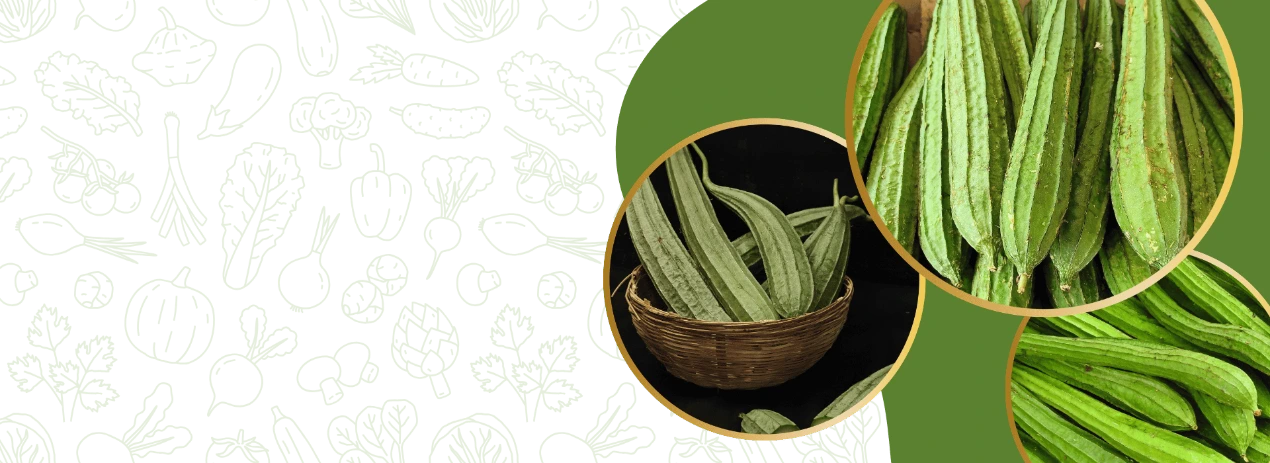
F1 Hybrid Ridge Gourd Varieties
Our ridge gourd hybrids are designed for continuous harvesting, attractive fruit appearance, and reliable productivity in open-field cultivation.
Complete Package of Practices for Ridge Gourd Cultivation
Ridge gourd is a fast-growing, warm-season climbing vine grown for its long, ridged, tender young fruit. Like its cousins it crops best on a pandal (overhead bower), has flowers that open in the evening and are worked by bees and moths, and must be picked young before it turns fibrous. It is a reliable, productive cucurbit with strong demand in Asian and ethnic markets. This guide covers full technical practice plus a country-wise climate and sowing calendar for farmers worldwide.
Quick Navigation
- 01 Crop Overview & Types
- 02 Climatic Requirements
- 03 Soil & Field Preparation
- 04 Seed Rate, Soaking & Treatment
- 05 Sowing, Spacing & Thinning
- 06 Pandal / Trellis Training
- 07 Pollination & Flowering
- 08 Nutrient Management
- 09 Irrigation
- 10 Weed & Intercultural Care
- 11 Pest Management
- 12 Disease Management
- 13 Fruit Care
- 14 Harvesting & Post-Harvest
- 15 Country-Wise Climate & Sowing Guide
- 16 Frequently Asked Questions
1. Crop Overview & Types
- Common names: Ridge gourd, ribbed gourd, turai
- Scientific name: Luffa acutangula
- Crop type: Warm-season, frost-sensitive, vigorous climbing vine
- Identifying feature: long fruit with prominent lengthwise ridges; light to dark green.
- Uses: Cooking vegetable, eaten young and tender; popular in Asian and ethnic markets.
- Nutritional value: Low-calorie, good source of fibre, water and minerals.
2. Climatic Requirements
- Temperature: 24–35 °C is ideal; the crop loves warmth and is frost-sensitive. Germination needs warm soil.
- Climate: Warm conditions in both summer and the rainy season; hardy and adaptable.
- Soil: Well-drained fertile loam rich in organic matter; pH 6.0–7.0. Avoid waterlogging.
- Rainfall: Grows well in the rains with good drainage; humidity raises mildew and fruit-fly pressure.
3. Soil & Field Preparation
- Plough to a fine tilth and level the field for good drainage.
- Incorporate 20–25 t/ha of well-decomposed FYM / compost during land preparation.
- Form raised beds or pits along the pandal line, mixed with compost.
4. Seed Rate, Soaking & Treatment
Seed rate
- Hybrid: 2.5–3.0 kg/ha
- Open-pollinated varieties: 4–5 kg/ha
Seed soaking & treatment
- Soak the hard seed in water for 12–24 hours before sowing to speed up germination.
- Treat seed with Trichoderma viride @ 4 g/kg, or Thiram / Captan @ 2–3 g/kg, against seed- and soil-borne diseases.
5. Sowing, Spacing & Thinning
- Sow directly by dibbling 2–3 seeds per hill, or transplant pro-tray seedlings.
- Spacing: about 1.5–2.5 m between rows and 0.6–1.0 m between plants.
- After germination, thin to 1–2 healthy plants per hill.
- Sow into warm, moist soil for quick germination.
6. Pandal / Trellis Training
- Train the vines onto a pandal (overhead bower) or tall trellis for the best yield and quality.
- On a pandal the long ridged fruit hangs straight and clean, vines get full sun and airflow, and harvesting is easy.
- Guide the main vine up and let it spread across the top; tie loosely as needed.
7. Pollination & Flowering
- Ridge gourd has separate male and female flowers that open in the late afternoon and evening, pollinated by bees and moths.
- Encourage pollinators and spray pesticides only in the late evening, avoiding peak flower opening where possible.
- Where pollinators are scarce, hand-pollinate in the evening or early morning while flowers are open, transferring pollen from male to female flowers.
8. Nutrient Management (per hectare)
Indicative dose — adjust to soil test report and local recommendation:
| Nutrient | Dose | Application timing |
|---|---|---|
| Nitrogen (N) | 80–100 kg | Half basal; balance in splits during vining and fruiting |
| Phosphorus (P2O5) | 50–60 kg | Full basal at sowing |
| Potassium (K2O) | 60–80 kg | Basal plus top-dress at fruiting |
| Micronutrients | As recommended | Support continuous flowering and fruiting |
9. Irrigation
- Keep soil evenly moist; the summer crop needs regular irrigation, the rainy crop much less.
- Critical stages: flowering and fruit development.
- Avoid waterlogging, which causes root rot and wilt.
- Drip irrigation with mulch gives uniform moisture and keeps foliage dry.
10. Weed & Intercultural Care
- Keep the field weed-free in the early stages by shallow hoeing or mulching.
- Keep training the vines onto the pandal as they grow.
- Remove old and diseased leaves to maintain airflow.
11. Plant Protection — Pests
| Pest | Symptom | Management |
|---|---|---|
| Fruit fly (major) | Stings young fruit; maggots; fruit rots and drops | Pheromone / cue-lure traps; bait sprays; collect and destroy fallen fruit; bag young fruit where needed |
| Red pumpkin beetle | Damages seedlings and young leaves | Protect seedlings; collect beetles; need-based control |
| Epilachna beetle | Skeletonised leaves | Hand-pick; need-based control |
| Aphids / mites | Sap-sucking; leaf distortion; spread virus | Sticky traps; need-based control |
12. Plant Protection — Diseases
| Disease | Symptom | Management |
|---|---|---|
| Downy mildew (main in humid weather) | Angular yellow patches on leaves | Pandal airflow; keep foliage dry; preventive fungicide before wet spells |
| Powdery mildew | White powdery growth on leaves | Sulphur or recommended fungicide |
| Mosaic virus | Mottled, distorted leaves | Control aphids; rogue out infected plants |
| Anthracnose | Spots on leaves and fruit | Clean seed; crop rotation; protectant fungicide |
| Fusarium wilt | Wilting and yellowing of vines | Crop rotation; good drainage |
13. Fruit Care
- On a pandal, the ridged fruit hangs straight and develops good shape — remove malformed or damaged fruit early.
- Keep growth steady with even moisture and nutrition for tender, well-formed fruit.
- Poor fruit set is almost always a pollination issue — ensure bee activity or hand-pollinate.
14. Harvesting & Post-Harvest
- First harvest begins about 55–65 days after sowing.
- Pick fruit young and tender, at marketable length, while the skin is soft and the ridges are still tender.
- Pick frequently — every 3–4 days; over-mature fruit becomes hard and fibrous and loses market value, and frequent picking keeps the vine fruiting.
- Cut fruit with a short stalk; handle gently.
- Yield: 10–20 t/ha, depending on variety, season and management.
- Fruit is perishable — keep cool and market quickly.
15. Country-Wise Climate & Sowing Guide
Ridge gourd is a warm-season crop sown once frost has passed and the soil is warm, grown through the warm months in both summer and the rainy season (with good drainage). Windows below are indicative — adjust to local altitude and micro-climate.
| Country / Region | Climate | Best sowing / season | Heat & rain caution |
|---|---|---|---|
| TROPICAL & SUBTROPICAL (main belts) | |||
| India | Tropical / subtropical | Summer: Jan–Mar. Rainy: Jun–Jul | Ensure drainage and fruit-fly control in the monsoon |
| Pakistan / Bangladesh | Subtropical | Spring and early rainy season | Avoid frost-prone early sowing |
| Egypt / N. Africa | Arid subtropical | Spring–summer | Irrigation-led; thrives in the heat |
| Nigeria / Kenya / E. Africa | Tropical | Warm rainy season or dry season with irrigation | Drain well in heavy rains |
| Gulf (Saudi / UAE) | Hot arid | Mar–Sep (warm season) | Grows well in Gulf heat with irrigation |
| SE Asia | Humid tropical (key crop) | Year-round in warm zones | High fruit-fly and mildew pressure in the wet season |
| MEDITERRANEAN & WARM TEMPERATE | |||
| Spain / Italy / Turkey | Mediterranean | Late spring–summer (after frost) | Needs the warm summer months |
| Mexico | Subtropical | Spring–summer | Avoid cool early sowing |
| TEMPERATE (warm summer crop) | |||
| USA (south) | Warm temperate | Late spring–summer once soil is warm | Popular in warm regions and Asian markets |
| China | Warm temperate to subtropical (major producer) | Spring–summer | Sow after frost; warm soil needed |
| N. Europe | Cool temperate | Greenhouse / poly-tunnel only | Open field rarely warm enough |
16. Frequently Asked Questions
Does ridge gourd need a pandal?
For best results, yes. A pandal or tall trellis keeps the long ridged fruit hanging straight and clean, improves airflow and reduces disease, and makes harvesting easy. Ground-grown vines give crooked, soiled fruit.
When do ridge gourd flowers open, and how do I hand-pollinate?
Flowers open in the late afternoon and evening and are worked by bees and moths. Where pollinators are scarce, hand-pollinate in the evening or early morning while flowers are open, transferring pollen from male to female flowers.
Why is my ridge gourd fibrous and hard?
It was picked too late. Harvest young and tender, while the skin and ridges are still soft; once it matures it becomes fibrous. Pick every 3–4 days.
How do I control fruit fly?
Use pheromone / cue-lure traps and bait sprays, collect and destroy fallen fruit, and bag young fruit where pressure is high. Spray only in the evening to protect pollinators.
How much ridge gourd seed is needed per hectare?
About 2.5–3.0 kg/ha for hybrids and 4–5 kg/ha for open-pollinated varieties.
What temperature does ridge gourd need?
About 24–35 °C. It is a warm-season crop that loves heat and is killed by frost.
What yield can I expect from ridge gourd?
About 10–20 t/ha, depending on variety, season, the pandal system and how regularly the fruit is picked.
Explore More Farmson Crop Guides
Sponge Gourd Bitter Gourd Bottle Gourd Cucumber Watermelon View All Vegetable SeedsGrow with Farmson Biotech Ridge Gourd Seeds
High-yield F1 hybrid ridge gourd varieties — long, tender, well-ridged fruit for every market.
Send Export InquiryComplete Package of Practices for Ridge Gourd Cultivation
Ridge gourd is a fast-growing, warm-season climbing vine grown for its long, ridged, tender young fruit. Like its cousins it crops best on a pandal (overhead bower), has flowers that open in the evening and are worked by bees and moths, and must be picked young before it turns fibrous. It is a reliable, productive cucurbit with strong demand in Asian and ethnic markets. This guide covers full technical practice plus a country-wise climate and sowing calendar for farmers worldwide.
Quick Navigation
- 01 Crop Overview & Types
- 02 Climatic Requirements
- 03 Soil & Field Preparation
- 04 Seed Rate, Soaking & Treatment
- 05 Sowing, Spacing & Thinning
- 06 Pandal / Trellis Training
- 07 Pollination & Flowering
- 08 Nutrient Management
- 09 Irrigation
- 10 Weed & Intercultural Care
- 11 Pest Management
- 12 Disease Management
- 13 Fruit Care
- 14 Harvesting & Post-Harvest
- 15 Country-Wise Climate & Sowing Guide
- 16 Frequently Asked Questions
1. Crop Overview & Types
- Common names: Ridge gourd, ribbed gourd, turai
- Scientific name: Luffa acutangula
- Crop type: Warm-season, frost-sensitive, vigorous climbing vine
- Identifying feature: long fruit with prominent lengthwise ridges; light to dark green.
- Uses: Cooking vegetable, eaten young and tender; popular in Asian and ethnic markets.
- Nutritional value: Low-calorie, good source of fibre, water and minerals.
2. Climatic Requirements
- Temperature: 24–35 °C is ideal; the crop loves warmth and is frost-sensitive. Germination needs warm soil.
- Climate: Warm conditions in both summer and the rainy season; hardy and adaptable.
- Soil: Well-drained fertile loam rich in organic matter; pH 6.0–7.0. Avoid waterlogging.
- Rainfall: Grows well in the rains with good drainage; humidity raises mildew and fruit-fly pressure.
3. Soil & Field Preparation
- Plough to a fine tilth and level the field for good drainage.
- Incorporate 20–25 t/ha of well-decomposed FYM / compost during land preparation.
- Form raised beds or pits along the pandal line, mixed with compost.
4. Seed Rate, Soaking & Treatment
Seed rate
- Hybrid: 2.5–3.0 kg/ha
- Open-pollinated varieties: 4–5 kg/ha
Seed soaking & treatment
- Soak the hard seed in water for 12–24 hours before sowing to speed up germination.
- Treat seed with Trichoderma viride @ 4 g/kg, or Thiram / Captan @ 2–3 g/kg, against seed- and soil-borne diseases.
5. Sowing, Spacing & Thinning
- Sow directly by dibbling 2–3 seeds per hill, or transplant pro-tray seedlings.
- Spacing: about 1.5–2.5 m between rows and 0.6–1.0 m between plants.
- After germination, thin to 1–2 healthy plants per hill.
- Sow into warm, moist soil for quick germination.
6. Pandal / Trellis Training
- Train the vines onto a pandal (overhead bower) or tall trellis for the best yield and quality.
- On a pandal the long ridged fruit hangs straight and clean, vines get full sun and airflow, and harvesting is easy.
- Guide the main vine up and let it spread across the top; tie loosely as needed.
7. Pollination & Flowering
- Ridge gourd has separate male and female flowers that open in the late afternoon and evening, pollinated by bees and moths.
- Encourage pollinators and spray pesticides only in the late evening, avoiding peak flower opening where possible.
- Where pollinators are scarce, hand-pollinate in the evening or early morning while flowers are open, transferring pollen from male to female flowers.
8. Nutrient Management (per hectare)
Indicative dose — adjust to soil test report and local recommendation:
| Nutrient | Dose | Application timing |
|---|---|---|
| Nitrogen (N) | 80–100 kg | Half basal; balance in splits during vining and fruiting |
| Phosphorus (P2O5) | 50–60 kg | Full basal at sowing |
| Potassium (K2O) | 60–80 kg | Basal plus top-dress at fruiting |
| Micronutrients | As recommended | Support continuous flowering and fruiting |
9. Irrigation
- Keep soil evenly moist; the summer crop needs regular irrigation, the rainy crop much less.
- Critical stages: flowering and fruit development.
- Avoid waterlogging, which causes root rot and wilt.
- Drip irrigation with mulch gives uniform moisture and keeps foliage dry.
10. Weed & Intercultural Care
- Keep the field weed-free in the early stages by shallow hoeing or mulching.
- Keep training the vines onto the pandal as they grow.
- Remove old and diseased leaves to maintain airflow.
11. Plant Protection — Pests
| Pest | Symptom | Management |
|---|---|---|
| Fruit fly (major) | Stings young fruit; maggots; fruit rots and drops | Pheromone / cue-lure traps; bait sprays; collect and destroy fallen fruit; bag young fruit where needed |
| Red pumpkin beetle | Damages seedlings and young leaves | Protect seedlings; collect beetles; need-based control |
| Epilachna beetle | Skeletonised leaves | Hand-pick; need-based control |
| Aphids / mites | Sap-sucking; leaf distortion; spread virus | Sticky traps; need-based control |
12. Plant Protection — Diseases
| Disease | Symptom | Management |
|---|---|---|
| Downy mildew (main in humid weather) | Angular yellow patches on leaves | Pandal airflow; keep foliage dry; preventive fungicide before wet spells |
| Powdery mildew | White powdery growth on leaves | Sulphur or recommended fungicide |
| Mosaic virus | Mottled, distorted leaves | Control aphids; rogue out infected plants |
| Anthracnose | Spots on leaves and fruit | Clean seed; crop rotation; protectant fungicide |
| Fusarium wilt | Wilting and yellowing of vines | Crop rotation; good drainage |
13. Fruit Care
- On a pandal, the ridged fruit hangs straight and develops good shape — remove malformed or damaged fruit early.
- Keep growth steady with even moisture and nutrition for tender, well-formed fruit.
- Poor fruit set is almost always a pollination issue — ensure bee activity or hand-pollinate.
14. Harvesting & Post-Harvest
- First harvest begins about 55–65 days after sowing.
- Pick fruit young and tender, at marketable length, while the skin is soft and the ridges are still tender.
- Pick frequently — every 3–4 days; over-mature fruit becomes hard and fibrous and loses market value, and frequent picking keeps the vine fruiting.
- Cut fruit with a short stalk; handle gently.
- Yield: 10–20 t/ha, depending on variety, season and management.
- Fruit is perishable — keep cool and market quickly.
15. Country-Wise Climate & Sowing Guide
Ridge gourd is a warm-season crop sown once frost has passed and the soil is warm, grown through the warm months in both summer and the rainy season (with good drainage). Windows below are indicative — adjust to local altitude and micro-climate.
| Country / Region | Climate | Best sowing / season | Heat & rain caution |
|---|---|---|---|
| TROPICAL & SUBTROPICAL (main belts) | |||
| India | Tropical / subtropical | Summer: Jan–Mar. Rainy: Jun–Jul | Ensure drainage and fruit-fly control in the monsoon |
| Pakistan / Bangladesh | Subtropical | Spring and early rainy season | Avoid frost-prone early sowing |
| Egypt / N. Africa | Arid subtropical | Spring–summer | Irrigation-led; thrives in the heat |
| Nigeria / Kenya / E. Africa | Tropical | Warm rainy season or dry season with irrigation | Drain well in heavy rains |
| Gulf (Saudi / UAE) | Hot arid | Mar–Sep (warm season) | Grows well in Gulf heat with irrigation |
| SE Asia | Humid tropical (key crop) | Year-round in warm zones | High fruit-fly and mildew pressure in the wet season |
| MEDITERRANEAN & WARM TEMPERATE | |||
| Spain / Italy / Turkey | Mediterranean | Late spring–summer (after frost) | Needs the warm summer months |
| Mexico | Subtropical | Spring–summer | Avoid cool early sowing |
| TEMPERATE (warm summer crop) | |||
| USA (south) | Warm temperate | Late spring–summer once soil is warm | Popular in warm regions and Asian markets |
| China | Warm temperate to subtropical (major producer) | Spring–summer | Sow after frost; warm soil needed |
| N. Europe | Cool temperate | Greenhouse / poly-tunnel only | Open field rarely warm enough |
16. Frequently Asked Questions
Does ridge gourd need a pandal?
For best results, yes. A pandal or tall trellis keeps the long ridged fruit hanging straight and clean, improves airflow and reduces disease, and makes harvesting easy. Ground-grown vines give crooked, soiled fruit.
When do ridge gourd flowers open, and how do I hand-pollinate?
Flowers open in the late afternoon and evening and are worked by bees and moths. Where pollinators are scarce, hand-pollinate in the evening or early morning while flowers are open, transferring pollen from male to female flowers.
Why is my ridge gourd fibrous and hard?
It was picked too late. Harvest young and tender, while the skin and ridges are still soft; once it matures it becomes fibrous. Pick every 3–4 days.
How do I control fruit fly?
Use pheromone / cue-lure traps and bait sprays, collect and destroy fallen fruit, and bag young fruit where pressure is high. Spray only in the evening to protect pollinators.
How much ridge gourd seed is needed per hectare?
About 2.5–3.0 kg/ha for hybrids and 4–5 kg/ha for open-pollinated varieties.
What temperature does ridge gourd need?
About 24–35 °C. It is a warm-season crop that loves heat and is killed by frost.
What yield can I expect from ridge gourd?
About 10–20 t/ha, depending on variety, season, the pandal system and how regularly the fruit is picked.
Explore More Farmson Crop Guides
Sponge Gourd Bitter Gourd Bottle Gourd Cucumber Watermelon View All Vegetable SeedsGrow with Farmson Biotech Ridge Gourd Seeds
High-yield F1 hybrid ridge gourd varieties — long, tender, well-ridged fruit for every market.
Send Export InquiryAgricultural Advisory Notice
The recommendations and crop guidance provided on this website are intended for informational purposes only and should not be considered a guaranteed agronomic outcome. Local climatic conditions, soil health, cultivation methods, and regional practices may influence actual crop performance. FARMSON BIOTECH PVT LTD recommends farmers seek guidance from authorized agricultural experts or local government agricultural authorities before cultivation decisions.