Premium Bean Seeds
High-yielding hybrid bean varieties developed for uniform pod quality, strong adaptability, and commercial cultivation across multiple growing conditions.
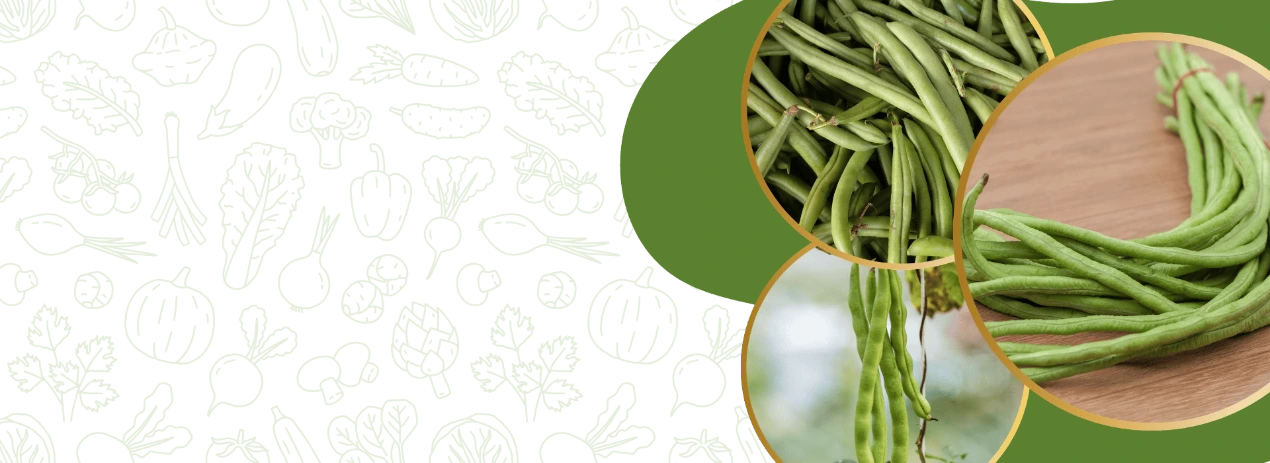
Beans Varieties
FARMSON BIOTECH F1 Hybrid Bean Seeds are developed for superior pod setting, attractive color, excellent marketability, and reliable field performance. These varieties are suitable for fresh market production and commercial farming with strong plant vigor and continuous harvesting potential. The hybrids are selected for adaptability, better shelf appeal, and improved productivity under suitable agronomic practices.
Complete Package of Practices for Beans Cultivation
French beans (also known as green beans, snap beans or haricot vert) are one of the most widely grown vegetable legumes worldwide, prized for tender, fleshy green pods harvested before the seeds inside mature. They are a cool-season legume, grown as bush (dwarf) or pole (climbing) types, and success depends on choosing the right type for your system, sowing into a mild temperature window, inoculating with Rhizobium to fix nitrogen naturally, and protecting against pod borer, bean fly and the rust / anthracnose disease group. This guide covers complete technical practice from sowing to harvest, plus a country-wise climate and sowing calendar for farmers worldwide.
Quick Navigation
- 01 Crop Overview
- 02 Climatic Requirements
- 03 Soil & Field Preparation
- 04 Sowing & Crop Establishment
- 05 Seed Rate & Seed Treatment
- 06 Spacing & Plant Population
- 07 Staking & Training (Pole Types)
- 08 Nutrient Management
- 09 Irrigation
- 10 Weed & Intercultural Care
- 11 Pest Management
- 12 Disease Management
- 13 Physiological Disorders
- 14 Harvesting & Post-Harvest
- 15 Country-Wise Climate & Sowing Guide
- 16 Frequently Asked Questions
1. Crop Overview
- Common names: French bean, green bean, snap bean, haricot vert, string bean, farash bean
- Scientific name: Phaseolus vulgaris L.
- Crop type: Cool-season annual legume; frost-sensitive; self-pollinated
- Growth habit:
- Bush / dwarf type — 30–50 cm tall, needs no support, short concentrated harvest of 3–4 picks over 2–3 weeks
- Pole / climbing type — 2–3 m tall, must be staked, extended harvest over 6–10 weeks with higher total yield
- End-use: Fresh tender green pods (vegetable market), processed (canned, frozen), and dry bean / rajma at full maturity
- Nutritional value: Rich in protein, fibre, folate, vitamins A, C and K, and minerals
- Pollination: Self-pollinated, but bee visits improve yield in some varieties
2. Climatic Requirements
- Temperature: Optimum 18–25 °C. Growth slows below 15 °C; flowers and young pods drop above 30 °C; frost kills the plant.
- Flower drop: the single biggest reason for low yield. Caused by temperature above 30 °C, soil moisture stress, or strong winds during flowering.
- Daylength: Day-neutral — can be grown across multiple seasons wherever the temperature window is right.
- Rainfall: 600–900 mm well-distributed; sensitive to waterlogging. Heavy rain at flowering causes pod drop and bacterial diseases.
- Altitude: Sea level to 2000 m; in the tropics, hill stations and winter plains both work; in temperate regions, spring and summer crop.
3. Soil & Field Preparation
- Soil: Well-drained sandy loam to loam rich in organic matter; pH 6.0–7.5.
- Avoid heavy clay (poor drainage), saline soil and strongly acidic (<5.5) soil — the Rhizobium symbiosis is weak outside the optimum pH band.
- Plough 2–3 times to a fine tilth and level the field.
- Incorporate 10–15 t/ha well-decomposed FYM or compost at the last ploughing.
- Form ridges or raised beds 15–20 cm high for irrigated crops; ensure drainage in monsoon-grown crops.
4. Sowing & Crop Establishment
- Beans are direct-sown; no nursery is needed.
- Sowing depth: 3–5 cm. Deeper sowing in light soil; shallower in heavy or moist soil.
- Method: Dibbling, seed-drill or precision planter. Plant 1–2 seeds per hill at the correct spacing.
- Soil moisture: Adequate moisture at sowing is critical — a pre-sowing irrigation 3–4 days before planting gives the most uniform stand.
- Germination: 5–8 days at soil temperature 18–25 °C; slower and patchier below 15 °C.
- For staggered supply, sow in batches at 10–15 day intervals (bush type) so that the harvest window extends over months.
5. Seed Rate & Seed Treatment
Seed rate
- Bush / dwarf type: 60–80 kg/ha
- Pole / climbing type: 25–30 kg/ha (much wider spacing)
Seed treatment
- Treat seed with Trichoderma viride @ 4 g/kg or Thiram / Captan @ 2–3 g/kg to control seed rot, damping-off and seedling diseases.
- Rhizobium inoculation: Inoculate seed with Rhizobium phaseoli @ 5–10 g/kg seed just before sowing. This builds nitrogen-fixing nodules and reduces N fertilizer need.
- Apply biofertilizer (Rhizobium + PSB) in a 10% jaggery / sugar solution; shade-dry seed for 30 minutes before sowing.
- Never mix fungicide and biofertilizer in the same step — treat with fungicide first, dry, then inoculate with Rhizobium.
6. Spacing & Plant Population
| Type | Spacing | Plant population (per ha) | Notes |
|---|---|---|---|
| Bush (dwarf) | 30–45 cm × 10–15 cm | 2.0–3.0 lakh | Twin-row layout on raised beds works best for mechanical or hand picking |
| Pole (climbing) | 60–75 cm × 30 cm | 40,000–55,000 | One plant per hill against each stake; double row along the trellis |
| Export / processing (bush) | 45 × 8–10 cm | 2.5–3.0 lakh | Tight spacing improves pod straightness and machine harvesting |
- Thin to one healthy plant per hill 10–12 days after emergence.
- Fill gaps within the first week so the stand stays uniform.
7. Staking & Training (Pole Types)
Only pole / climbing beans need support — bush types need none. But for pole types, staking decides yield more than fertilizer or irrigation.
- Stakes: bamboo, wood or steel rods 2.5–3.0 m long, sunk 30–40 cm into the ground at each hill.
- A-frame or tepee: two opposing stakes tied at the top, with the bean planted at the base of each — simple, sturdy and easy to harvest from.
- Trellis / wire system: two horizontal wires at 0.5 m and 1.8 m with vertical strings; ideal for commercial-scale planting.
- Guide the vine onto the support when it reaches 15–20 cm; from there it climbs by twining on its own.
- Tie loosely with soft twine where needed; remove dense, shaded inner growth to improve airflow.
8. Nutrient Management (per hectare)
Indicative dose — adjust to soil test report and local recommendation. Beans fix their own nitrogen, so the N dose is deliberately low:
| Nutrient | Dose | Application timing |
|---|---|---|
| Nitrogen (N) | 40–60 kg | Half basal as a "starter" dose; balance at flowering only if growth is weak |
| Phosphorus (P2O5) | 60–80 kg | Full basal at sowing — key for root, nodulation and pod set |
| Potassium (K2O) | 40–60 kg | Full basal; improves pod fill and disease resistance |
| Calcium & Boron | As recommended | Supports flower retention and reduces pod drop |
| Micronutrients (Zn, Mo) | As per soil test | Mo improves Rhizobium nodulation; foliar Zn if deficiency shows |
9. Irrigation
- Beans are sensitive to both drought and waterlogging.
- Critical stages: flowering (30–40 DAS) and pod-fill (45–60 DAS). Stress here directly drops pods.
- Irrigate every 5–7 days in the irrigated dry-season crop; lighter and less frequent in the cooler season.
- Avoid overhead irrigation during flowering — wet flowers drop and wet leaves favour bacterial blight, anthracnose and rust.
- Drip irrigation with plastic mulch on raised beds is ideal for export-grade French beans: it gives even moisture, saves water, suppresses weeds and reduces disease.
- Stop irrigation 7–10 days before the last harvest of bush types so pods firm up; pole types are picked over a long period and need continued irrigation.
10. Weed & Intercultural Care
- Keep the field weed-free for the first 30–45 days — this is the most critical period for weed competition.
- Two shallow hand-weedings (at 15–20 and 35–40 DAS) plus inter-row hoeing are usually sufficient.
- Earthing-up at 25–30 days strengthens the plant base — especially important for bush types to support pod-laden branches.
- Pre-emergence herbicide (e.g. pendimethalin 1.0 kg a.i./ha) can be used as per local recommendation in large-scale plantings.
- Avoid deep cultivation — bean roots are shallow and surface nodules damage easily.
11. Plant Protection — Pests
| Pest | Symptom | Management |
|---|---|---|
| Pod borer (Maruca vitrata, Helicoverpa) | Larvae bore into pods, feed on seed; entry holes with frass | Pheromone traps; HaNPV; NSKE 5%; need-based sprays at bud and pod stage |
| Bean fly / stem fly | Wilting of seedlings; tunnels in the stem base | Seed treatment with imidacloprid; foliar spray at seedling stage; clean crop residues |
| Aphids | Sap-sucking; honeydew and sooty mould; virus transmission (BCMV) | Yellow sticky traps; neem oil 1500 ppm; control vector to prevent virus |
| Whitefly | Sucking pest; transmits leaf curl viruses | Yellow sticky traps; insect-proof early growth; selective insecticides |
| Thrips & jassids | Silvering, distortion of leaves and flowers | Blue sticky traps; need-based sprays; avoid during flowering |
| Spider mites | Bronzed, stippled leaves in dry hot weather | Sulphur sprays; recommended acaricide; raise canopy humidity |
12. Plant Protection — Diseases
| Disease | Symptom | Management |
|---|---|---|
| Damping-off (Pythium, Rhizoctonia) | Seedlings collapse at soil line | Seed treatment; raised beds; avoid over-watering; Trichoderma |
| Anthracnose (Colletotrichum) | Sunken brown lesions on pods, stems and leaves | Disease-free seed; crop rotation; mancozeb / carbendazim sprays |
| Angular leaf spot | Angular brown lesions bounded by veins | Resistant varieties; copper-based sprays; remove crop debris |
| Rust (Uromyces appendiculatus) | Reddish-brown pustules on underside of leaves | Resistant varieties; mancozeb / propiconazole; field sanitation |
| Bacterial blight | Water-soaked lesions on leaves and pods; spreads in wet weather | Disease-free seed; avoid overhead irrigation; copper-based sprays |
| Bean Common Mosaic Virus (BCMV) | Mosaic, leaf distortion, stunting | Resistant varieties; aphid control; rogue out infected plants early |
| Root rot (Fusarium) | Yellowing, wilting, brown roots | Crop rotation; raised beds; Trichoderma soil application; drainage |
13. Physiological Disorders
- Flower and pod drop: the most common bean complaint — caused by temperature above 30 °C, water stress, or strong wind at flowering. Schedule sowing so flowering falls in the mild window and keep soil moisture even.
- Crooked or curled pods: caused by uneven moisture, calcium / boron deficiency, or insect damage during early pod development. Maintain steady irrigation and balanced micronutrients.
- Stringy pods: over-mature picking, or use of older "stringy" varieties — pick at the right stage and choose modern "stringless" hybrids.
- Sunscald: exposed pods scorch in hot direct sun — maintain healthy foliage cover.
- Poor nodulation: seen as a pale, yellow crop in spite of good agronomy — caused by no Rhizobium inoculation, low molybdenum, very acidic soil, or carry-over herbicide.
14. Harvesting & Post-Harvest
- Stage: pick tender pods when they are fully elongated, smooth and firm, but before the seeds inside bulge visibly. Pods should snap cleanly when bent.
- First pick: bush type 50–60 days after sowing; pole type 60–75 days after sowing.
- Picking interval: every 2–3 days for fresh / export market; every 4–5 days for local market.
- Pick in the cool part of the day; handle gently to avoid bruising and water loss.
- Grade by length, colour and shape (for export, uniformity is crucial); pack in ventilated crates or perforated cartons.
- Yield:
- Bush type: 8–12 t/ha green pods
- Pole type: 15–25 t/ha green pods
- Dry bean (rajma) end-use: 1.5–2.5 t/ha grain
- Storage: fresh pods keep 7–10 days at 4–7 °C and 90–95% RH; do not store below 4 °C — chilling injury appears as pitting and russeting.
15. Country-Wise Climate & Sowing Guide
French beans need a mild temperature window of 18–25 °C — not too hot, not too cold, and frost-free. Schedule sowing so flowering falls in the mild season and pod development is not hit by extreme heat or heavy rain. Windows below are indicative — adjust to local altitude and micro-climate.
| Country / Region | Climate | Best sowing / season | Heat & rain caution |
|---|---|---|---|
| TROPICAL & SUBTROPICAL (grow in the cool, dry season) | |||
| India (plains) | Subtropical | Rabi: Oct–Nov. Spring: Jan–Feb. Hill stations: Mar–Aug | Avoid kharif monsoon (bacterial blight, anthracnose) and summer extremes |
| India (hills) | Temperate | Apr–Aug (Himachal, Uttarakhand, Nilgiris) — main export window | Frost in late autumn ends the crop |
| Pakistan / Bangladesh / Nepal | Subtropical | Oct–Nov and Feb–Mar (plains); summer crop in hills | Frost risk in mid-winter; heat in late spring |
| Sri Lanka / Indonesia / Philippines | Humid tropical | Cool dry season; mid-elevation areas year-round | Wet season brings severe pod and leaf disease |
| Gulf (Saudi / UAE / Oman) | Hot arid | Oct–Feb (cool season); greenhouse in summer | Summer too hot for open-field flowering |
| AFRICA (major French bean export belts to EU) | |||
| Kenya | Tropical (highland) | Year-round at 1500–2000 m altitude — world's leading haricot vert exporter | Rainy season disease pressure; maintain residue compliance |
| Ethiopia / Uganda / Tanzania | Tropical (altitude-dependent) | Long rains (Mar–May), short rains (Sep–Nov) | Avoid pod development in heaviest rains |
| Egypt / Morocco | Arid subtropical / Mediterranean | Sep–Mar (winter crop); major EU export window | Drip irrigation essential; manage cool-night frost risk |
| South Africa / Zimbabwe | Subtropical | Spring (Sep–Nov) and autumn (Feb–Mar) | Avoid mid-summer heat at flowering |
| MEDITERRANEAN & MILD TEMPERATE | |||
| Spain / Italy / Greece | Mediterranean | Field: spring (Mar–May). Greenhouse: much of the year | Manage summer heat with timing; greenhouse extends season |
| Turkey / Iran | Mediterranean / semi-arid | Apr–Jun; protected in winter | Frost risk in winter; heat at mid-summer flowering |
| Mexico / Central America | Subtropical / tropical | Autumn–winter (export window to USA) | Avoid summer-rain flowering |
| TEMPERATE (summer crop or protected) | |||
| USA | Temperate to subtropical | Spring after last frost (north); autumn–winter in Florida / California | Match to frost-free window; mid-summer heat in the south |
| Netherlands / N. Europe / UK | Cool temperate | May–Jul (open field); heated greenhouse for shoulders | Short season; protected cropping standard |
| China | Wide range | Spring in the north; protected cultivation widely used in cold seasons | Avoid summer-rain flowering in the south |
| Australia | Wide range | Spring (south); autumn–winter (north, tropics) | Match to frost-free window |
16. Frequently Asked Questions
What is the difference between bush and pole beans?
Bush (dwarf) beans grow only 30–50 cm tall, need no staking, and produce a concentrated harvest over 2–3 weeks — ideal for short-cycle and machine-harvested crops. Pole (climbing) beans grow 2–3 m on stakes or a trellis and crop continuously for 6–10 weeks, with 2–3 times higher total yield per hectare — ideal for fresh-market growers with available labour.
Why are my bean flowers dropping without setting pods?
The most common causes are temperature above 30 °C during flowering, moisture stress (either too dry or sudden flooding), or hot dry winds. Schedule flowering into the mild 18–25 °C window, keep irrigation even, and choose heat-tolerant varieties for warmer climates.
How much bean seed is needed per hectare?
About 60–80 kg/ha for bush / dwarf types and 25–30 kg/ha for pole / climbing types. The lower rate for pole types reflects their much wider spacing.
Why is Rhizobium inoculation important for beans?
Beans are legumes and form nitrogen-fixing nodules on their roots with Rhizobium phaseoli. Inoculation builds active nodules early, reduces N fertilizer need, and improves yield — especially in fields where beans haven't been grown for several years. Without it, the crop relies entirely on soil and applied N.
How much nitrogen does a bean crop need?
Only a modest "starter" dose of 40–60 kg N/ha. Too much N gives lush vine and few pods. Inoculate with Rhizobium, apply phosphorus and potassium fully, and only top up with N at flowering if the crop looks pale.
What is the right stage to pick green beans?
Pick when pods are fully elongated, smooth, firm and a bright green colour, but before the seeds inside bulge visibly. The pod should snap cleanly when bent. Over-mature pods become stringy and tough and lose export grade.
How do I control pod borer in beans?
The main borer is Maruca vitrata. Use pheromone traps at 5/ha for monitoring, spray HaNPV @ 250 LE/ha or NSKE 5% at the bud stage, and apply a need-based recommended insecticide at the start of flowering. Hand-pick and destroy damaged pods to reduce next-generation pressure.
Can I grow beans during the monsoon / rainy season?
It's risky. Heavy rain at flowering causes pod drop, and humid conditions invite bacterial blight, anthracnose, rust and root rot. If a monsoon crop is unavoidable, choose resistant varieties, plant on raised beds, use drip irrigation, ensure good drainage, and budget for protective fungicide sprays.
Explore More Farmson Crop Guides
Peas Cultivation Sunflower Sweet Corn Cowpea Cluster Bean (Guar) View All Vegetable SeedsGrow with Farmson Biotech Bean Seeds
High-yielding F1 hybrid & OPV bush and pole bean varieties for fresh-market, export and processing use.
Send Export InquiryComplete Package of Practices for Beans Cultivation
French beans (also known as green beans, snap beans or haricot vert) are one of the most widely grown vegetable legumes worldwide, prized for tender, fleshy green pods harvested before the seeds inside mature. They are a cool-season legume, grown as bush (dwarf) or pole (climbing) types, and success depends on choosing the right type for your system, sowing into a mild temperature window, inoculating with Rhizobium to fix nitrogen naturally, and protecting against pod borer, bean fly and the rust / anthracnose disease group. This guide covers complete technical practice from sowing to harvest, plus a country-wise climate and sowing calendar for farmers worldwide.
Quick Navigation
- 01 Crop Overview
- 02 Climatic Requirements
- 03 Soil & Field Preparation
- 04 Sowing & Crop Establishment
- 05 Seed Rate & Seed Treatment
- 06 Spacing & Plant Population
- 07 Staking & Training (Pole Types)
- 08 Nutrient Management
- 09 Irrigation
- 10 Weed & Intercultural Care
- 11 Pest Management
- 12 Disease Management
- 13 Physiological Disorders
- 14 Harvesting & Post-Harvest
- 15 Country-Wise Climate & Sowing Guide
- 16 Frequently Asked Questions
1. Crop Overview
- Common names: French bean, green bean, snap bean, haricot vert, string bean, farash bean
- Scientific name: Phaseolus vulgaris L.
- Crop type: Cool-season annual legume; frost-sensitive; self-pollinated
- Growth habit:
- Bush / dwarf type — 30–50 cm tall, needs no support, short concentrated harvest of 3–4 picks over 2–3 weeks
- Pole / climbing type — 2–3 m tall, must be staked, extended harvest over 6–10 weeks with higher total yield
- End-use: Fresh tender green pods (vegetable market), processed (canned, frozen), and dry bean / rajma at full maturity
- Nutritional value: Rich in protein, fibre, folate, vitamins A, C and K, and minerals
- Pollination: Self-pollinated, but bee visits improve yield in some varieties
2. Climatic Requirements
- Temperature: Optimum 18–25 °C. Growth slows below 15 °C; flowers and young pods drop above 30 °C; frost kills the plant.
- Flower drop: the single biggest reason for low yield. Caused by temperature above 30 °C, soil moisture stress, or strong winds during flowering.
- Daylength: Day-neutral — can be grown across multiple seasons wherever the temperature window is right.
- Rainfall: 600–900 mm well-distributed; sensitive to waterlogging. Heavy rain at flowering causes pod drop and bacterial diseases.
- Altitude: Sea level to 2000 m; in the tropics, hill stations and winter plains both work; in temperate regions, spring and summer crop.
3. Soil & Field Preparation
- Soil: Well-drained sandy loam to loam rich in organic matter; pH 6.0–7.5.
- Avoid heavy clay (poor drainage), saline soil and strongly acidic (<5.5) soil — the Rhizobium symbiosis is weak outside the optimum pH band.
- Plough 2–3 times to a fine tilth and level the field.
- Incorporate 10–15 t/ha well-decomposed FYM or compost at the last ploughing.
- Form ridges or raised beds 15–20 cm high for irrigated crops; ensure drainage in monsoon-grown crops.
4. Sowing & Crop Establishment
- Beans are direct-sown; no nursery is needed.
- Sowing depth: 3–5 cm. Deeper sowing in light soil; shallower in heavy or moist soil.
- Method: Dibbling, seed-drill or precision planter. Plant 1–2 seeds per hill at the correct spacing.
- Soil moisture: Adequate moisture at sowing is critical — a pre-sowing irrigation 3–4 days before planting gives the most uniform stand.
- Germination: 5–8 days at soil temperature 18–25 °C; slower and patchier below 15 °C.
- For staggered supply, sow in batches at 10–15 day intervals (bush type) so that the harvest window extends over months.
5. Seed Rate & Seed Treatment
Seed rate
- Bush / dwarf type: 60–80 kg/ha
- Pole / climbing type: 25–30 kg/ha (much wider spacing)
Seed treatment
- Treat seed with Trichoderma viride @ 4 g/kg or Thiram / Captan @ 2–3 g/kg to control seed rot, damping-off and seedling diseases.
- Rhizobium inoculation: Inoculate seed with Rhizobium phaseoli @ 5–10 g/kg seed just before sowing. This builds nitrogen-fixing nodules and reduces N fertilizer need.
- Apply biofertilizer (Rhizobium + PSB) in a 10% jaggery / sugar solution; shade-dry seed for 30 minutes before sowing.
- Never mix fungicide and biofertilizer in the same step — treat with fungicide first, dry, then inoculate with Rhizobium.
6. Spacing & Plant Population
| Type | Spacing | Plant population (per ha) | Notes |
|---|---|---|---|
| Bush (dwarf) | 30–45 cm × 10–15 cm | 2.0–3.0 lakh | Twin-row layout on raised beds works best for mechanical or hand picking |
| Pole (climbing) | 60–75 cm × 30 cm | 40,000–55,000 | One plant per hill against each stake; double row along the trellis |
| Export / processing (bush) | 45 × 8–10 cm | 2.5–3.0 lakh | Tight spacing improves pod straightness and machine harvesting |
- Thin to one healthy plant per hill 10–12 days after emergence.
- Fill gaps within the first week so the stand stays uniform.
7. Staking & Training (Pole Types)
Only pole / climbing beans need support — bush types need none. But for pole types, staking decides yield more than fertilizer or irrigation.
- Stakes: bamboo, wood or steel rods 2.5–3.0 m long, sunk 30–40 cm into the ground at each hill.
- A-frame or tepee: two opposing stakes tied at the top, with the bean planted at the base of each — simple, sturdy and easy to harvest from.
- Trellis / wire system: two horizontal wires at 0.5 m and 1.8 m with vertical strings; ideal for commercial-scale planting.
- Guide the vine onto the support when it reaches 15–20 cm; from there it climbs by twining on its own.
- Tie loosely with soft twine where needed; remove dense, shaded inner growth to improve airflow.
8. Nutrient Management (per hectare)
Indicative dose — adjust to soil test report and local recommendation. Beans fix their own nitrogen, so the N dose is deliberately low:
| Nutrient | Dose | Application timing |
|---|---|---|
| Nitrogen (N) | 40–60 kg | Half basal as a "starter" dose; balance at flowering only if growth is weak |
| Phosphorus (P2O5) | 60–80 kg | Full basal at sowing — key for root, nodulation and pod set |
| Potassium (K2O) | 40–60 kg | Full basal; improves pod fill and disease resistance |
| Calcium & Boron | As recommended | Supports flower retention and reduces pod drop |
| Micronutrients (Zn, Mo) | As per soil test | Mo improves Rhizobium nodulation; foliar Zn if deficiency shows |
9. Irrigation
- Beans are sensitive to both drought and waterlogging.
- Critical stages: flowering (30–40 DAS) and pod-fill (45–60 DAS). Stress here directly drops pods.
- Irrigate every 5–7 days in the irrigated dry-season crop; lighter and less frequent in the cooler season.
- Avoid overhead irrigation during flowering — wet flowers drop and wet leaves favour bacterial blight, anthracnose and rust.
- Drip irrigation with plastic mulch on raised beds is ideal for export-grade French beans: it gives even moisture, saves water, suppresses weeds and reduces disease.
- Stop irrigation 7–10 days before the last harvest of bush types so pods firm up; pole types are picked over a long period and need continued irrigation.
10. Weed & Intercultural Care
- Keep the field weed-free for the first 30–45 days — this is the most critical period for weed competition.
- Two shallow hand-weedings (at 15–20 and 35–40 DAS) plus inter-row hoeing are usually sufficient.
- Earthing-up at 25–30 days strengthens the plant base — especially important for bush types to support pod-laden branches.
- Pre-emergence herbicide (e.g. pendimethalin 1.0 kg a.i./ha) can be used as per local recommendation in large-scale plantings.
- Avoid deep cultivation — bean roots are shallow and surface nodules damage easily.
11. Plant Protection — Pests
| Pest | Symptom | Management |
|---|---|---|
| Pod borer (Maruca vitrata, Helicoverpa) | Larvae bore into pods, feed on seed; entry holes with frass | Pheromone traps; HaNPV; NSKE 5%; need-based sprays at bud and pod stage |
| Bean fly / stem fly | Wilting of seedlings; tunnels in the stem base | Seed treatment with imidacloprid; foliar spray at seedling stage; clean crop residues |
| Aphids | Sap-sucking; honeydew and sooty mould; virus transmission (BCMV) | Yellow sticky traps; neem oil 1500 ppm; control vector to prevent virus |
| Whitefly | Sucking pest; transmits leaf curl viruses | Yellow sticky traps; insect-proof early growth; selective insecticides |
| Thrips & jassids | Silvering, distortion of leaves and flowers | Blue sticky traps; need-based sprays; avoid during flowering |
| Spider mites | Bronzed, stippled leaves in dry hot weather | Sulphur sprays; recommended acaricide; raise canopy humidity |
12. Plant Protection — Diseases
| Disease | Symptom | Management |
|---|---|---|
| Damping-off (Pythium, Rhizoctonia) | Seedlings collapse at soil line | Seed treatment; raised beds; avoid over-watering; Trichoderma |
| Anthracnose (Colletotrichum) | Sunken brown lesions on pods, stems and leaves | Disease-free seed; crop rotation; mancozeb / carbendazim sprays |
| Angular leaf spot | Angular brown lesions bounded by veins | Resistant varieties; copper-based sprays; remove crop debris |
| Rust (Uromyces appendiculatus) | Reddish-brown pustules on underside of leaves | Resistant varieties; mancozeb / propiconazole; field sanitation |
| Bacterial blight | Water-soaked lesions on leaves and pods; spreads in wet weather | Disease-free seed; avoid overhead irrigation; copper-based sprays |
| Bean Common Mosaic Virus (BCMV) | Mosaic, leaf distortion, stunting | Resistant varieties; aphid control; rogue out infected plants early |
| Root rot (Fusarium) | Yellowing, wilting, brown roots | Crop rotation; raised beds; Trichoderma soil application; drainage |
13. Physiological Disorders
- Flower and pod drop: the most common bean complaint — caused by temperature above 30 °C, water stress, or strong wind at flowering. Schedule sowing so flowering falls in the mild window and keep soil moisture even.
- Crooked or curled pods: caused by uneven moisture, calcium / boron deficiency, or insect damage during early pod development. Maintain steady irrigation and balanced micronutrients.
- Stringy pods: over-mature picking, or use of older "stringy" varieties — pick at the right stage and choose modern "stringless" hybrids.
- Sunscald: exposed pods scorch in hot direct sun — maintain healthy foliage cover.
- Poor nodulation: seen as a pale, yellow crop in spite of good agronomy — caused by no Rhizobium inoculation, low molybdenum, very acidic soil, or carry-over herbicide.
14. Harvesting & Post-Harvest
- Stage: pick tender pods when they are fully elongated, smooth and firm, but before the seeds inside bulge visibly. Pods should snap cleanly when bent.
- First pick: bush type 50–60 days after sowing; pole type 60–75 days after sowing.
- Picking interval: every 2–3 days for fresh / export market; every 4–5 days for local market.
- Pick in the cool part of the day; handle gently to avoid bruising and water loss.
- Grade by length, colour and shape (for export, uniformity is crucial); pack in ventilated crates or perforated cartons.
- Yield:
- Bush type: 8–12 t/ha green pods
- Pole type: 15–25 t/ha green pods
- Dry bean (rajma) end-use: 1.5–2.5 t/ha grain
- Storage: fresh pods keep 7–10 days at 4–7 °C and 90–95% RH; do not store below 4 °C — chilling injury appears as pitting and russeting.
15. Country-Wise Climate & Sowing Guide
French beans need a mild temperature window of 18–25 °C — not too hot, not too cold, and frost-free. Schedule sowing so flowering falls in the mild season and pod development is not hit by extreme heat or heavy rain. Windows below are indicative — adjust to local altitude and micro-climate.
| Country / Region | Climate | Best sowing / season | Heat & rain caution |
|---|---|---|---|
| TROPICAL & SUBTROPICAL (grow in the cool, dry season) | |||
| India (plains) | Subtropical | Rabi: Oct–Nov. Spring: Jan–Feb. Hill stations: Mar–Aug | Avoid kharif monsoon (bacterial blight, anthracnose) and summer extremes |
| India (hills) | Temperate | Apr–Aug (Himachal, Uttarakhand, Nilgiris) — main export window | Frost in late autumn ends the crop |
| Pakistan / Bangladesh / Nepal | Subtropical | Oct–Nov and Feb–Mar (plains); summer crop in hills | Frost risk in mid-winter; heat in late spring |
| Sri Lanka / Indonesia / Philippines | Humid tropical | Cool dry season; mid-elevation areas year-round | Wet season brings severe pod and leaf disease |
| Gulf (Saudi / UAE / Oman) | Hot arid | Oct–Feb (cool season); greenhouse in summer | Summer too hot for open-field flowering |
| AFRICA (major French bean export belts to EU) | |||
| Kenya | Tropical (highland) | Year-round at 1500–2000 m altitude — world's leading haricot vert exporter | Rainy season disease pressure; maintain residue compliance |
| Ethiopia / Uganda / Tanzania | Tropical (altitude-dependent) | Long rains (Mar–May), short rains (Sep–Nov) | Avoid pod development in heaviest rains |
| Egypt / Morocco | Arid subtropical / Mediterranean | Sep–Mar (winter crop); major EU export window | Drip irrigation essential; manage cool-night frost risk |
| South Africa / Zimbabwe | Subtropical | Spring (Sep–Nov) and autumn (Feb–Mar) | Avoid mid-summer heat at flowering |
| MEDITERRANEAN & MILD TEMPERATE | |||
| Spain / Italy / Greece | Mediterranean | Field: spring (Mar–May). Greenhouse: much of the year | Manage summer heat with timing; greenhouse extends season |
| Turkey / Iran | Mediterranean / semi-arid | Apr–Jun; protected in winter | Frost risk in winter; heat at mid-summer flowering |
| Mexico / Central America | Subtropical / tropical | Autumn–winter (export window to USA) | Avoid summer-rain flowering |
| TEMPERATE (summer crop or protected) | |||
| USA | Temperate to subtropical | Spring after last frost (north); autumn–winter in Florida / California | Match to frost-free window; mid-summer heat in the south |
| Netherlands / N. Europe / UK | Cool temperate | May–Jul (open field); heated greenhouse for shoulders | Short season; protected cropping standard |
| China | Wide range | Spring in the north; protected cultivation widely used in cold seasons | Avoid summer-rain flowering in the south |
| Australia | Wide range | Spring (south); autumn–winter (north, tropics) | Match to frost-free window |
16. Frequently Asked Questions
What is the difference between bush and pole beans?
Bush (dwarf) beans grow only 30–50 cm tall, need no staking, and produce a concentrated harvest over 2–3 weeks — ideal for short-cycle and machine-harvested crops. Pole (climbing) beans grow 2–3 m on stakes or a trellis and crop continuously for 6–10 weeks, with 2–3 times higher total yield per hectare — ideal for fresh-market growers with available labour.
Why are my bean flowers dropping without setting pods?
The most common causes are temperature above 30 °C during flowering, moisture stress (either too dry or sudden flooding), or hot dry winds. Schedule flowering into the mild 18–25 °C window, keep irrigation even, and choose heat-tolerant varieties for warmer climates.
How much bean seed is needed per hectare?
About 60–80 kg/ha for bush / dwarf types and 25–30 kg/ha for pole / climbing types. The lower rate for pole types reflects their much wider spacing.
Why is Rhizobium inoculation important for beans?
Beans are legumes and form nitrogen-fixing nodules on their roots with Rhizobium phaseoli. Inoculation builds active nodules early, reduces N fertilizer need, and improves yield — especially in fields where beans haven't been grown for several years. Without it, the crop relies entirely on soil and applied N.
How much nitrogen does a bean crop need?
Only a modest "starter" dose of 40–60 kg N/ha. Too much N gives lush vine and few pods. Inoculate with Rhizobium, apply phosphorus and potassium fully, and only top up with N at flowering if the crop looks pale.
What is the right stage to pick green beans?
Pick when pods are fully elongated, smooth, firm and a bright green colour, but before the seeds inside bulge visibly. The pod should snap cleanly when bent. Over-mature pods become stringy and tough and lose export grade.
How do I control pod borer in beans?
The main borer is Maruca vitrata. Use pheromone traps at 5/ha for monitoring, spray HaNPV @ 250 LE/ha or NSKE 5% at the bud stage, and apply a need-based recommended insecticide at the start of flowering. Hand-pick and destroy damaged pods to reduce next-generation pressure.
Can I grow beans during the monsoon / rainy season?
It's risky. Heavy rain at flowering causes pod drop, and humid conditions invite bacterial blight, anthracnose, rust and root rot. If a monsoon crop is unavoidable, choose resistant varieties, plant on raised beds, use drip irrigation, ensure good drainage, and budget for protective fungicide sprays.
Explore More Farmson Crop Guides
Peas Cultivation Sunflower Sweet Corn Cowpea Cluster Bean (Guar) View All Vegetable SeedsGrow with Farmson Biotech Bean Seeds
High-yielding F1 hybrid & OPV bush and pole bean varieties for fresh-market, export and processing use.
Send Export InquiryAgricultural Advisory Notice
The recommendations and crop guidance provided on this website are intended for informational purposes only and should not be considered a guaranteed agronomic outcome. Local climatic conditions, soil health, cultivation methods, and regional practices may influence actual crop performance. FARMSON BIOTECH PVT LTD recommends farmers seek guidance from authorized agricultural experts or local government agricultural authorities before cultivation decisions.