

Premium Beetroot Seeds
High-quality beetroot varieties suitable for uniform root development, attractive color, and commercial cultivation.
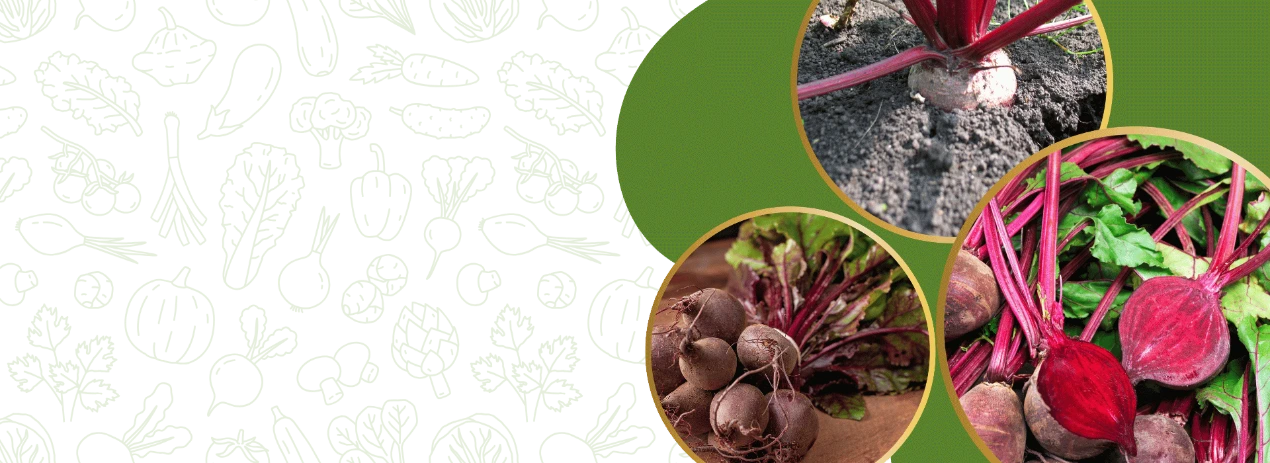
Beetroot Varieties
FARMSON BIOTECH Beetroot Seeds are selected for smooth root shape, vibrant internal color, strong field adaptability, and consistent performance. Suitable for fresh market supply and processing purposes, these varieties support uniform maturity and excellent root quality under proper crop management practices.
Complete Package of Practices for Beetroot Cultivation
Beetroot is a cool-season root vegetable grown for its sweet, deep-red root, used fresh, in salads, juice and processing, with growing health-food demand. A good crop comes down to root quality: it needs deep, loose, stone-free soil for smooth round roots, early thinning of its multi-seedling clusters, boron and steady moisture to prevent internal black-heart, cracking and woodiness, and harvesting at the tender stage. This guide covers full technical practice plus a country-wise climate and sowing calendar for farmers worldwide.
ઝડપી નેવિગેશન
- 01 પાક પરિચય અને પ્રકારો
- 02 આબોહવાની જરૂરિયાત
- 03 જમીન અને ખેતરની તૈયારી
- 04 બીજ દર અને બીજ માવજત
- 05 Sowing & Spacing
- 06 Thinning (Multigerm Clusters)
- 07 Nutrient Management & Boron
- 08 Irrigation
- 09 નીંદણ અને આંતરખેડ
- 10 Root Disorders
- 11 જીવાત વ્યવસ્થાપન
- 12 રોગ વ્યવસ્થાપન
- 13 Harvesting
- 14 Yield & Post-Harvest
- 15 દેશવાર આબોહવા અને વાવેતર માર્ગદર્શિકા
- 16 વારંવાર પૂછાતા પ્રશ્નો
1. પાક પરિચય અને પ્રકારો
- Common names: Beetroot, table beet, garden beet, chukandar
- Scientific name: Beta vulgaris L.
- Crop type: Cool-season biennial root crop, grown as an annual
- Types: Deep-red round types (e.g. Detroit Dark Red style), cylindrical, and golden / striped specialty types; multigerm (cluster) and monogerm (single) seed types.
- Uses: Fresh, salad, juice, processing, pickling; the young leaves (beet greens) are also edible.
- Nutritional value: Rich in folate, manganese, nitrates and antioxidants (betalains).
2. આબોહવાની જરૂરિયાત
- Temperature: 15–25 °C is ideal; beetroot is a cool-season crop and tolerates light frost. High heat gives poor colour, pale internal rings (zoning) and woody roots.
- Bolting: a long cold spell on young plants followed by warmth can trigger bolting (premature seed-stalk); avoid very early cold sowings of bolt-prone types.
- Soil: Deep, loose, well-drained sandy loam; pH 6.0–7.0 (tolerates up to 7.5). Sensitive to acidity.
- Rainfall: Best under controlled irrigation; uneven moisture harms root quality.
3. જમીન અને ખેતરની તૈયારી
- Plough deeply and work to a fine, loose, stone-free tilth — stones and clods cause forked, misshapen roots.
- Incorporate well-rotted FYM / compost; do not use fresh manure, which causes forking and hairy roots.
- Prepare raised beds or ridges with good drainage and a deep, soft root zone.
4. બીજ દર અને બીજ માવજત
બીજ દર
- Direct sowing: 7–10 kg/ha
બીજ પલાળવું અને માવજત
- Soak the seed (corky cluster) in water for 12–24 hours before sowing to speed up germination.
- Treat seed with Thiram / Captan @ 2–3 g/kg, or Trichoderma viride @ 4 g/kg, against damping-off.
5. Sowing & Spacing
- Sow seed directly in the field, 1.5–2 cm deep, in lines.
- Spacing: rows 30–45 cm apart; final plant spacing 8–10 cm after thinning.
- Sow into moist soil, or irrigate lightly after sowing for even germination.
6. Thinning (Multigerm Clusters)
- Standard beetroot "seed" is a multigerm cluster — each one produces 2–4 seedlings close together.
- Thin early, at the 2–3 true-leaf stage, to leave one strong seedling per station at the final spacing.
- Without thinning, crowded seedlings compete and give small, deformed roots.
- (Monogerm seed types produce a single seedling and need little thinning.)
7. Nutrient Management & Boron (per hectare)
સૂચક માત્રા — જમીન ચકાસણી અહેવાલ અને સ્થાનિક ભલામણ મુજબ ગોઠવો:
| પોષક તત્વ | માત્રા | આપવાનો સમય |
|---|---|---|
| નાઇટ્રોજન (N) | 80–100 kg | Part basal; a top-dress during growth — avoid excess, which favours tops over root |
| ફોસ્ફરસ (P2O5) | 50–60 kg | વાવેતર વખતે પૂરી માત્રા પાયામાં |
| પોટાશ (K2O) | 80–100 kg | Basal — important for root size, sweetness and colour |
| Boron (B) | As recommended (e.g. borax basal) | Prevents internal black-heart / brown rot of the root |
8. Irrigation
- Keep soil evenly moist throughout — steady moisture is the key to smooth, crack-free, tender roots.
- Irregular irrigation (dry then heavy watering) causes root cracking and woody, zoned roots.
- Avoid waterlogging, which causes rot.
- Drip irrigation gives the best, most uniform moisture control.
9. નીંદણ અને આંતરખેડ
- Keep the crop weed-free early, as beetroot competes poorly — do shallow hand weeding.
- Avoid deep hoeing that damages the developing root and shallow feeder roots.
- Light earthing-up keeps the root shoulders covered and prevents greening at the top.
10. Root Disorders
- Internal black-heart / brown rot: boron deficiency — apply boron, especially on light or alkaline soils.
- Zoning (pale internal rings): from heat and stress — grow in the cool season and keep moisture steady.
- Cracking: from irregular irrigation — maintain even soil moisture.
- Forking / hairy roots: from stones, clods or fresh manure — prepare deep, loose, stone-free soil and use only well-rotted manure.
- Woodiness: from over-maturity or heat — harvest at the tender stage.
- Bolting: from cold then warm spells on young plants — use the right window and bolt-tolerant varieties.
11. પાક સંરક્ષણ — જીવાત
| જીવાત | લક્ષણ | વ્યવસ્થાપન |
|---|---|---|
| પાન કોરિયું | Mines / blotches in leaves | Remove affected leaves; need-based control; clean cultivation |
| Aphids | Sap-sucking; curled leaves; spread virus | પીળા ચીકણા ટ્રેપ; વહેલું વ્યવસ્થાપન કરો |
| Cutworms | Cut young seedlings at the base | Field sanitation; need-based control |
| Caterpillars | Holes in leaves | Hand-pick; bio-pesticides; need-based control |
12. પાક સંરક્ષણ — રોગ
| રોગ | લક્ષણ | વ્યવસ્થાપન |
|---|---|---|
| Cercospora leaf spot (major) | Small spots with pale centres and dark margins on leaves | Crop rotation; resistant varieties; protectant fungicide; field sanitation |
| ધરુ મૃત્યુ (ડેમ્પિંગ-ઓફ) | Seedling collapse in wet soil | Seed treatment; good drainage; avoid over-watering |
| તળછારો (ડાઉની મિલ્ડ્યુ) | Pale patches with growth beneath in humid weather | Airflow; avoid leaf wetness; preventive fungicide |
| Root rot / scab | Rotting or scabby patches on roots | Crop rotation; good drainage; balanced soil pH |
13. Harvesting
- Roots are ready about 60–90 days after sowing, depending on variety and temperature.
- Harvest at the tender stage — about golf-ball to tennis-ball size (4–7 cm); over-mature roots turn woody and lose quality.
- Ease roots out of loose soil; avoid breaking the root tip or skin (cuts "bleed" colour).
- Twist or cut off the tops, leaving a short stub; young tops can be sold as beet greens.
14. Yield & Post-Harvest
- Yield: 20–35 t/ha, depending on variety, season and management.
- Grade by size; wash gently for the fresh market.
- Roots store well in cool, humid conditions; keep tops trimmed to reduce moisture loss.
- Handle carefully to avoid skin damage and colour bleeding.
15. દેશવાર આબોહવા અને વાવેતર માર્ગદર્શિકા
Beetroot is a cool-season root crop, so grow it in the cool months and harvest before heat causes woody, zoned roots. Windows below are indicative — adjust to local altitude and micro-climate.
| દેશ / પ્રદેશ | આબોહવા | શ્રેષ્ઠ વાવેતર / ઋતુ | Heat & bolting caution |
|---|---|---|---|
| TROPICAL & SUBTROPICAL (cool-season crop) | |||
| ભારત | ઉપોષ્ણકટિબંધીય | Main: Oct–Dec (cool season); hills in summer | Summer heat in the plains gives woody, pale-ringed roots |
| પાકિસ્તાન / બાંગ્લાદેશ | ઉપોષ્ણકટિબંધીય | Autumn–winter | Avoid the hot months |
| ઇજિપ્ત / ઉત્તર આફ્રિકા | શુષ્ક ઉપોષ્ણકટિબંધીય | Autumn–winter and early spring | Harvest before spring heat |
| ખાડી (સાઉદી / UAE) | ગરમ શુષ્ક | Oct–Mar (cool season) | Summer too hot in the open |
| Kenya / E. Africa highlands | Tropical highland | Cool highland window, much of the year | Lowland heat reduces root quality |
| MEDITERRANEAN & TEMPERATE | |||
| સ્પેન / ઇટાલી / તુર્કી | ભૂમધ્ય | Autumn and early spring | Avoid mid-summer heat |
| USA / N. Europe | Temperate | Spring and late-summer sowings | Early cold sowings can bolt; use bolt-tolerant types |
| ચીન | વિવિધ | વસંત અને પાનખર | Protected cultivation extends the cool window |
| મેક્સિકો | ઉપોષ્ણકટિબંધીય | Autumn–winter | Avoid summer heat |
16. વારંવાર પૂછાતા પ્રશ્નો
Why do I get several seedlings from one beetroot seed?
Standard beetroot "seed" is a multigerm cluster that produces 2–4 seedlings. Thin early, at the 2–3 leaf stage, to one strong seedling per station, or use monogerm seed for a single seedling.
What causes dark, corky tissue inside the root (black-heart)?
Boron deficiency. Apply boron as recommended, especially on light or high-pH soils, to prevent internal black-heart and brown rot.
Why are my beetroots forked or hairy?
Stones, clods or fresh manure in the soil. Prepare a deep, loose, stone-free seedbed and use only well-rotted manure for smooth, round roots.
Why are my roots cracked or woody with pale rings?
Cracking comes from irregular watering, while woodiness and pale internal rings (zoning) come from heat and over-maturity. Keep moisture steady, grow in the cool season, and harvest at the tender stage.
What temperature does beetroot need?
About 15–25 °C. It is a cool-season crop that tolerates light frost but gives poor colour and woody roots in high heat.
When should I harvest beetroot?
At the tender stage, about golf-ball to tennis-ball size (4–7 cm), roughly 60–90 days after sowing. Leaving roots too long makes them woody.
How much beetroot seed is needed per hectare?
About 7–10 kg/ha by direct sowing.
Grow with Farmson Biotech Beetroot Seeds
High-yield, deep-red beetroot varieties with smooth roots and sweet flavour for fresh and processing markets.
નિકાસ પૂછપરછ મોકલોComplete Package of Practices for Beetroot Cultivation
Beetroot is a cool-season root vegetable grown for its sweet, deep-red root, used fresh, in salads, juice and processing, with growing health-food demand. A good crop comes down to root quality: it needs deep, loose, stone-free soil for smooth round roots, early thinning of its multi-seedling clusters, boron and steady moisture to prevent internal black-heart, cracking and woodiness, and harvesting at the tender stage. This guide covers full technical practice plus a country-wise climate and sowing calendar for farmers worldwide.
ઝડપી નેવિગેશન
- 01 Crop Overview & Types
- 02 આબોહવાની જરૂરિયાત
- 03 જમીન અને ખેતરની તૈયારી
- 04 Seed Rate & Seed Treatment
- 05 Sowing & Spacing
- 06 Thinning (Multigerm Clusters)
- 07 Nutrient Management & Boron
- 08 Irrigation
- 09 નીંદણ અને આંતરખેડ
- 10 Root Disorders
- 11 જીવાત વ્યવસ્થાપન
- 12 રોગ વ્યવસ્થાપન
- 13 Harvesting
- 14 Yield & Post-Harvest
- 15 દેશવાર આબોહવા અને વાવેતર માર્ગદર્શિકા
- 16 વારંવાર પૂછાતા પ્રશ્નો
1. Crop Overview & Types
- Common names: Beetroot, table beet, garden beet, chukandar
- Scientific name: Beta vulgaris L.
- Crop type: Cool-season biennial root crop, grown as an annual
- Types: Deep-red round types (e.g. Detroit Dark Red style), cylindrical, and golden / striped specialty types; multigerm (cluster) and monogerm (single) seed types.
- Uses: Fresh, salad, juice, processing, pickling; the young leaves (beet greens) are also edible.
- Nutritional value: Rich in folate, manganese, nitrates and antioxidants (betalains).
2. આબોહવાની જરૂરિયાત
- Temperature: 15–25 °C is ideal; beetroot is a cool-season crop and tolerates light frost. High heat gives poor colour, pale internal rings (zoning) and woody roots.
- Bolting: a long cold spell on young plants followed by warmth can trigger bolting (premature seed-stalk); avoid very early cold sowings of bolt-prone types.
- Soil: Deep, loose, well-drained sandy loam; pH 6.0–7.0 (tolerates up to 7.5). Sensitive to acidity.
- Rainfall: Best under controlled irrigation; uneven moisture harms root quality.
3. જમીન અને ખેતરની તૈયારી
- Plough deeply and work to a fine, loose, stone-free tilth — stones and clods cause forked, misshapen roots.
- Incorporate well-rotted FYM / compost; do not use fresh manure, which causes forking and hairy roots.
- Prepare raised beds or ridges with good drainage and a deep, soft root zone.
4. Seed Rate & Seed Treatment
બીજ દર
- Direct sowing: 7–10 kg/ha
બીજ પલાળવું અને માવજત
- Soak the seed (corky cluster) in water for 12–24 hours before sowing to speed up germination.
- Treat seed with Thiram / Captan @ 2–3 g/kg, or Trichoderma viride @ 4 g/kg, against damping-off.
5. Sowing & Spacing
- Sow seed directly in the field, 1.5–2 cm deep, in lines.
- Spacing: rows 30–45 cm apart; final plant spacing 8–10 cm after thinning.
- Sow into moist soil, or irrigate lightly after sowing for even germination.
6. Thinning (Multigerm Clusters)
- Standard beetroot "seed" is a multigerm cluster — each one produces 2–4 seedlings close together.
- Thin early, at the 2–3 true-leaf stage, to leave one strong seedling per station at the final spacing.
- Without thinning, crowded seedlings compete and give small, deformed roots.
- (Monogerm seed types produce a single seedling and need little thinning.)
7. Nutrient Management & Boron (per hectare)
સૂચક માત્રા — જમીન ચકાસણી અહેવાલ અને સ્થાનિક ભલામણ મુજબ ગોઠવો:
| પોષક તત્વ | માત્રા | આપવાનો સમય |
|---|---|---|
| નાઇટ્રોજન (N) | 80–100 kg | Part basal; a top-dress during growth — avoid excess, which favours tops over root |
| ફોસ્ફરસ (P2O5) | 50–60 kg | વાવેતર વખતે પૂરી માત્રા પાયામાં |
| પોટાશ (K2O) | 80–100 kg | Basal — important for root size, sweetness and colour |
| Boron (B) | As recommended (e.g. borax basal) | Prevents internal black-heart / brown rot of the root |
8. Irrigation
- Keep soil evenly moist throughout — steady moisture is the key to smooth, crack-free, tender roots.
- Irregular irrigation (dry then heavy watering) causes root cracking and woody, zoned roots.
- Avoid waterlogging, which causes rot.
- Drip irrigation gives the best, most uniform moisture control.
9. નીંદણ અને આંતરખેડ
- Keep the crop weed-free early, as beetroot competes poorly — do shallow hand weeding.
- Avoid deep hoeing that damages the developing root and shallow feeder roots.
- Light earthing-up keeps the root shoulders covered and prevents greening at the top.
10. Root Disorders
- Internal black-heart / brown rot: boron deficiency — apply boron, especially on light or alkaline soils.
- Zoning (pale internal rings): from heat and stress — grow in the cool season and keep moisture steady.
- Cracking: from irregular irrigation — maintain even soil moisture.
- Forking / hairy roots: from stones, clods or fresh manure — prepare deep, loose, stone-free soil and use only well-rotted manure.
- Woodiness: from over-maturity or heat — harvest at the tender stage.
- Bolting: from cold then warm spells on young plants — use the right window and bolt-tolerant varieties.
11. પાક સંરક્ષણ — જીવાત
| જીવાત | લક્ષણ | વ્યવસ્થાપન |
|---|---|---|
| પાન કોરિયું | Mines / blotches in leaves | Remove affected leaves; need-based control; clean cultivation |
| Aphids | Sap-sucking; curled leaves; spread virus | પીળા ચીકણા ટ્રેપ; વહેલું વ્યવસ્થાપન કરો |
| Cutworms | Cut young seedlings at the base | Field sanitation; need-based control |
| Caterpillars | Holes in leaves | Hand-pick; bio-pesticides; need-based control |
12. પાક સંરક્ષણ — રોગ
| રોગ | લક્ષણ | વ્યવસ્થાપન |
|---|---|---|
| Cercospora leaf spot (major) | Small spots with pale centres and dark margins on leaves | Crop rotation; resistant varieties; protectant fungicide; field sanitation |
| ધરુ મૃત્યુ (ડેમ્પિંગ-ઓફ) | Seedling collapse in wet soil | Seed treatment; good drainage; avoid over-watering |
| તળછારો (ડાઉની મિલ્ડ્યુ) | Pale patches with growth beneath in humid weather | Airflow; avoid leaf wetness; preventive fungicide |
| Root rot / scab | Rotting or scabby patches on roots | Crop rotation; good drainage; balanced soil pH |
13. Harvesting
- Roots are ready about 60–90 days after sowing, depending on variety and temperature.
- Harvest at the tender stage — about golf-ball to tennis-ball size (4–7 cm); over-mature roots turn woody and lose quality.
- Ease roots out of loose soil; avoid breaking the root tip or skin (cuts "bleed" colour).
- Twist or cut off the tops, leaving a short stub; young tops can be sold as beet greens.
14. Yield & Post-Harvest
- Yield: 20–35 t/ha, depending on variety, season and management.
- Grade by size; wash gently for the fresh market.
- Roots store well in cool, humid conditions; keep tops trimmed to reduce moisture loss.
- Handle carefully to avoid skin damage and colour bleeding.
15. દેશવાર આબોહવા અને વાવેતર માર્ગદર્શિકા
Beetroot is a cool-season root crop, so grow it in the cool months and harvest before heat causes woody, zoned roots. Windows below are indicative — adjust to local altitude and micro-climate.
| દેશ / પ્રદેશ | આબોહવા | શ્રેષ્ઠ વાવેતર / ઋતુ | Heat & bolting caution |
|---|---|---|---|
| TROPICAL & SUBTROPICAL (cool-season crop) | |||
| ભારત | ઉપોષ્ણકટિબંધીય | Main: Oct–Dec (cool season); hills in summer | Summer heat in the plains gives woody, pale-ringed roots |
| પાકિસ્તાન / બાંગ્લાદેશ | ઉપોષ્ણકટિબંધીય | Autumn–winter | Avoid the hot months |
| ઇજિપ્ત / ઉત્તર આફ્રિકા | શુષ્ક ઉપોષ્ણકટિબંધીય | Autumn–winter and early spring | Harvest before spring heat |
| ખાડી (સાઉદી / UAE) | ગરમ શુષ્ક | Oct–Mar (cool season) | Summer too hot in the open |
| Kenya / E. Africa highlands | Tropical highland | Cool highland window, much of the year | Lowland heat reduces root quality |
| MEDITERRANEAN & TEMPERATE | |||
| સ્પેન / ઇટાલી / તુર્કી | ભૂમધ્ય | Autumn and early spring | Avoid mid-summer heat |
| USA / N. Europe | Temperate | Spring and late-summer sowings | Early cold sowings can bolt; use bolt-tolerant types |
| ચીન | વિવિધ | વસંત અને પાનખર | Protected cultivation extends the cool window |
| મેક્સિકો | ઉપોષ્ણકટિબંધીય | Autumn–winter | Avoid summer heat |
16. વારંવાર પૂછાતા પ્રશ્નો
Why do I get several seedlings from one beetroot seed?
Standard beetroot "seed" is a multigerm cluster that produces 2–4 seedlings. Thin early, at the 2–3 leaf stage, to one strong seedling per station, or use monogerm seed for a single seedling.
What causes dark, corky tissue inside the root (black-heart)?
Boron deficiency. Apply boron as recommended, especially on light or high-pH soils, to prevent internal black-heart and brown rot.
Why are my beetroots forked or hairy?
Stones, clods or fresh manure in the soil. Prepare a deep, loose, stone-free seedbed and use only well-rotted manure for smooth, round roots.
Why are my roots cracked or woody with pale rings?
Cracking comes from irregular watering, while woodiness and pale internal rings (zoning) come from heat and over-maturity. Keep moisture steady, grow in the cool season, and harvest at the tender stage.
What temperature does beetroot need?
About 15–25 °C. It is a cool-season crop that tolerates light frost but gives poor colour and woody roots in high heat.
When should I harvest beetroot?
At the tender stage, about golf-ball to tennis-ball size (4–7 cm), roughly 60–90 days after sowing. Leaving roots too long makes them woody.
How much beetroot seed is needed per hectare?
About 7–10 kg/ha by direct sowing.
Grow with Farmson Biotech Beetroot Seeds
High-yield, deep-red beetroot varieties with smooth roots and sweet flavour for fresh and processing markets.
નિકાસ પૂછપરછ મોકલોहाइब्रिड चुकंदर की खेती – हिंदी में मुख्य जानकारी
Farmson Biotech (गुजरात, भारत) के हाइब्रिड चुकंदर बीज से अच्छी फसल लेने के लिए ज़रूरी बातें। पूरी विस्तृत गाइड इसी पेज पर अंग्रेज़ी में दी गई है।
| बुवाई का समय | मैदानी इलाकों में अक्टूबर–नवंबर |
|---|---|
| बीज दर | 3–4 किलो प्रति एकड़; बोने से पहले बीज भिगोएँ |
| दूरी (कतार × पौधा) | कतार से कतार 30–45 सेमी, छँटाई के बाद पौधे से पौधे 8–10 सेमी |
| बुवाई का तरीका | सीधे खेत में बुवाई करें; नर्सरी की ज़रूरत नहीं। |
| पहली तुड़ाई | किस्म के अनुसार लगभग 60–90 दिन |
अक्सर पूछे जाने वाले सवाल
चुकंदर का अच्छा हाइब्रिड बीज कौन सा है?
सबसे अच्छी किस्म वही है जो आपके मौसम, मिट्टी और बाज़ार की माँग के अनुसार हो। आकार, रंग, पकने का समय और रोग सहनशीलता देखकर किस्म चुनें। Farmson की सभी किस्में यहाँ देखें, या WhatsApp पर पूछें – हम आपके इलाके के लिए किस्म सुझाएँगे।
एक एकड़ में चुकंदर का कितना बीज लगता है?
3–4 किलो प्रति एकड़; बोने से पहले बीज भिगोएँ। सही मात्रा किस्म, दूरी और बुवाई के तरीके पर निर्भर करती है।
हाइब्रिड चुकंदर की खेती कब करें?
मैदानी इलाकों में अक्टूबर–नवंबर। आपके क्षेत्र के मौसम के अनुसार समय थोड़ा आगे-पीछे हो सकता है।
Farmson का बीज कैसे खरीदें?
भारत में ऑनलाइन शॉप से ऑर्डर करें, या थोक और निर्यात के लिए हमसे संपर्क करें। हर पैकेट पर लॉट नंबर होता है, जिससे बीज का पूरा रिकॉर्ड पता चलता है।
यह जानकारी सामान्य मार्गदर्शन के लिए है। अपने खेत की मिट्टी, मौसम और किस्म के अनुसार नज़दीकी कृषि विशेषज्ञ या कृषि विज्ञान केंद्र (KVK) से सलाह ज़रूर लें।